

Cosmetic surgery SEO (search engine optimization for aesthetic practices) is an ongoing marketing retainer that helps practices rank in Google organic, Maps, and AI search for high-intent procedure-plus-city searches.
Because prospective patients begin their research online – at the moment they are ready to book – organic and local visibility function as a plastic surgery clinic’s front door.
This section defines the service, clarifies the cosmetic-versus-plastic terminology question, and explains why procedure-first local intent creates a direct path to booked consultations.
What exactly do cosmetic surgery SEO services do?
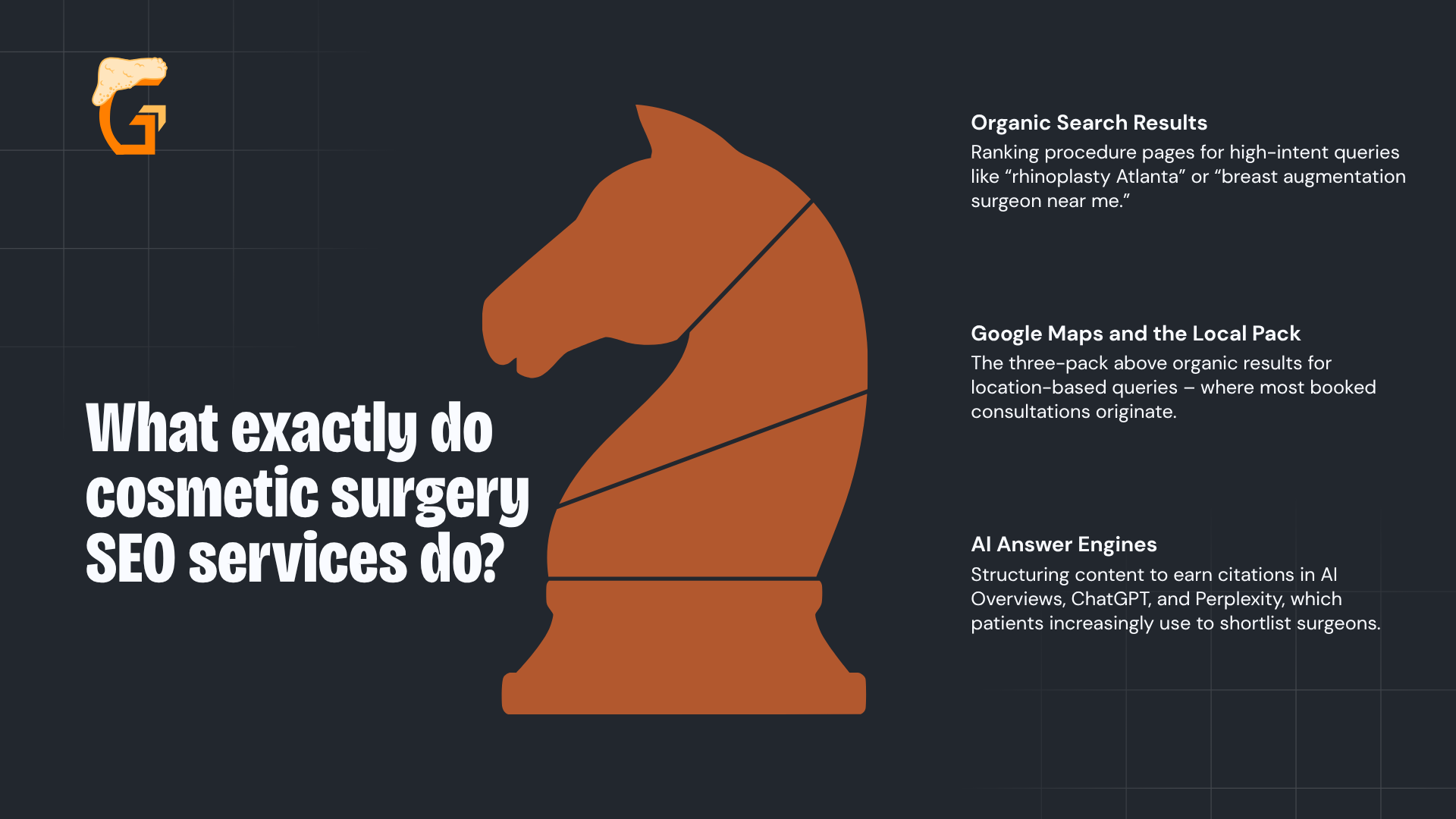
A cosmetic surgery SEO retainer optimizes three visibility channels – organic search results, the Local Pack and Maps, and AI answer engines such as Google AI Overviews and Perplexity.
The core channels the retainer covers include, but are not limited to:
- Organic search results: Ranking procedure pages for high-intent queries like “rhinoplasty Atlanta” or “breast augmentation surgeon near me.”
- Google Maps and the Local Pack: The three-pack above organic results for location-based queries – where most booked consultations originate.
- AI answer engines: Structuring content to earn citations in AI Overviews, ChatGPT, and Perplexity, which patients increasingly use to shortlist surgeons.
A peer-reviewed study reported by Wolters Kluwer found that about three-fourths of plastic surgery patients sought information online during their experience.
Because patients researching cosmetic procedures start online, organic and local visibility are the practice’s primary source of booked consultations.
Are “cosmetic surgery SEO” and “plastic surgery SEO” the same thing?
In search and marketing terms, plastic surgery SEO refers to the same service as cosmetic surgery SEO, and a practice should target both labels.
The key distinctions and search realities include, but are not limited to:
- The clinical difference: The American Society of Plastic Surgeons defines plastic surgery as a specialty spanning reconstruction and aesthetics. Cosmetic surgery is appearance-focused and elective – a subcategory, not a separate board certification.
- The search reality: Patients use both terms without distinction. A rhinoplasty patient might search “plastic surgeon near me” one day and “cosmetic surgeon Atlanta” the next with identical intent.
- The SEO implication: Targeting only one term set leaves the other uncontested – both should map to the same procedure pages and Google Business Profile.
Prospective patients switch between these phrasings without knowing the clinical distinction.
An SEO program that captures both protects booked consultations from competitors ranking for the phrase the practice ignored.
Why is cosmetic surgery search procedure-first and local?
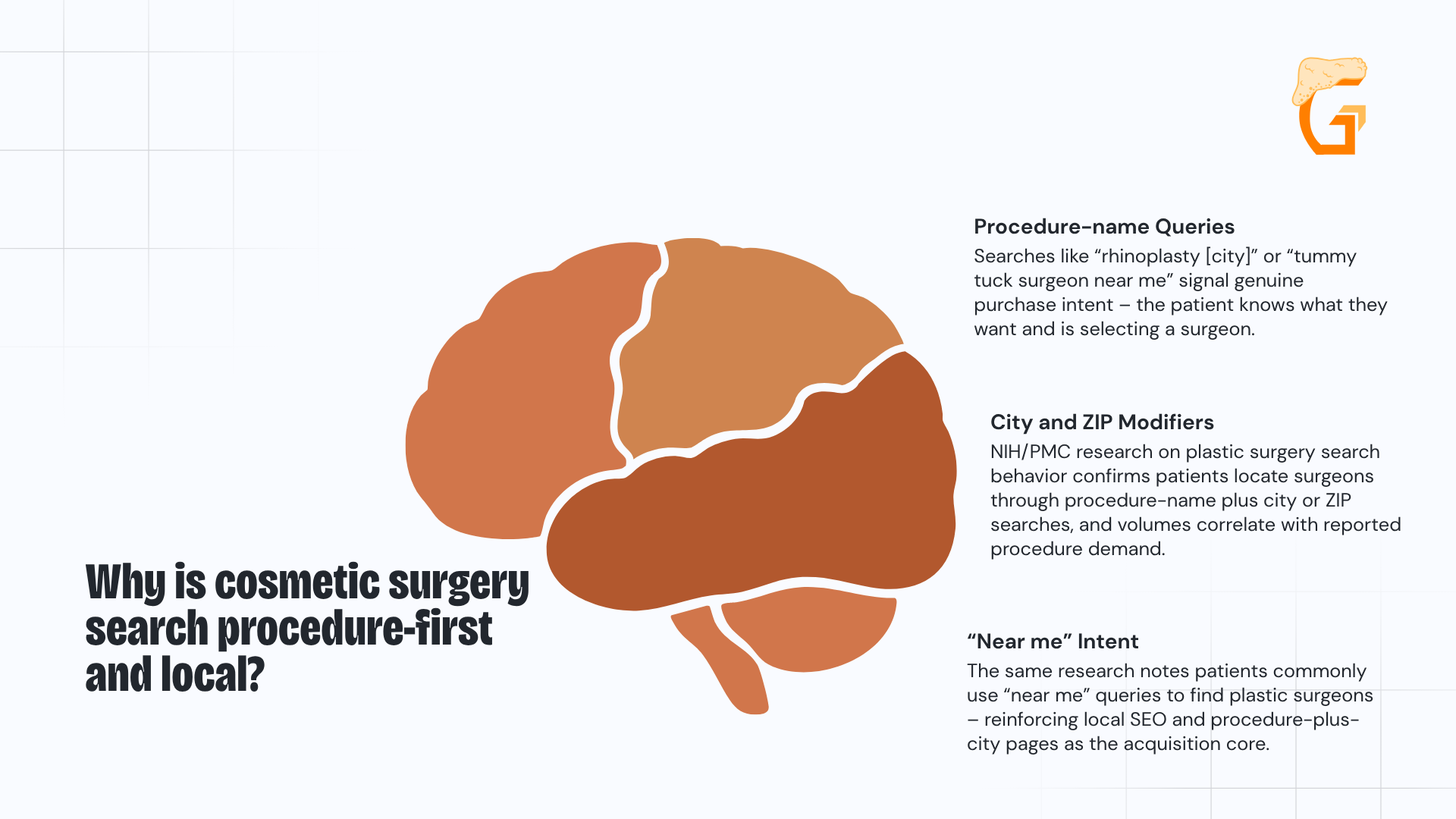
Plastic surgery SEO keywords pair a procedure name with a city or “near me” – patients rarely search by clinic brand.
A practice not visible to patients searching these queries is absent at the highest-intent moment in the patient journey.
The search behavior patterns that define cosmetic surgery intent include, but are not limited to:
- Procedure-name queries: Searches like “rhinoplasty [city]” or “tummy tuck surgeon near me” signal genuine purchase intent – the patient knows what they want and is selecting a surgeon.
- City and ZIP modifiers: NIH/PMC research on plastic surgery search behavior confirms patients locate surgeons through procedure-name plus city or ZIP searches, and volumes correlate with reported procedure demand.
- “Near me” intent: The same research notes patients commonly use “near me” queries to find plastic surgeons – reinforcing local SEO and procedure-plus-city pages as the acquisition core.
As Google’s Business Profile guidance notes, businesses with complete and accurate information are easier to match with the right searches.
Organic and local visibility built around procedure-plus-city intent is the practice’s most durable path to booked consultations.