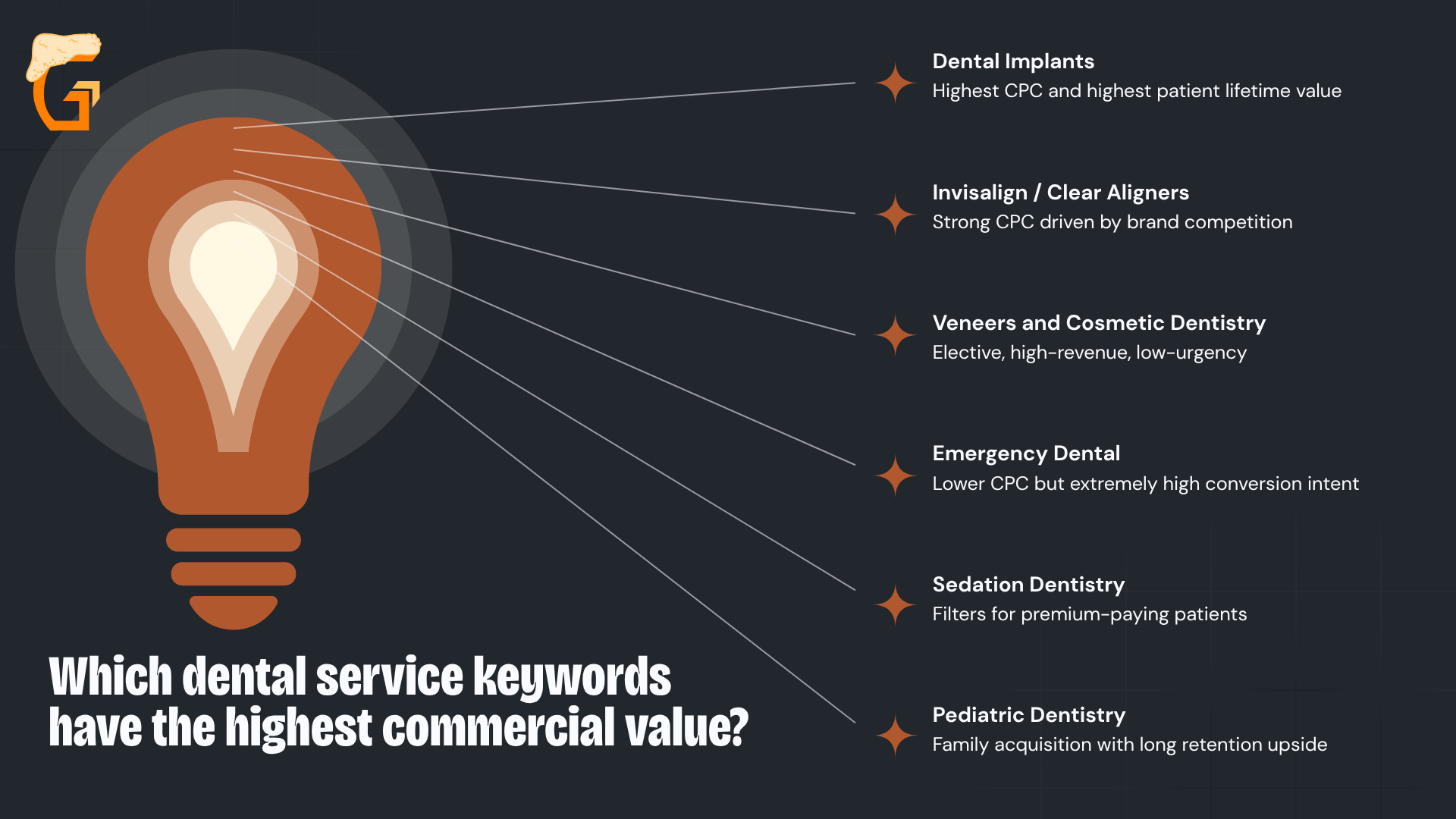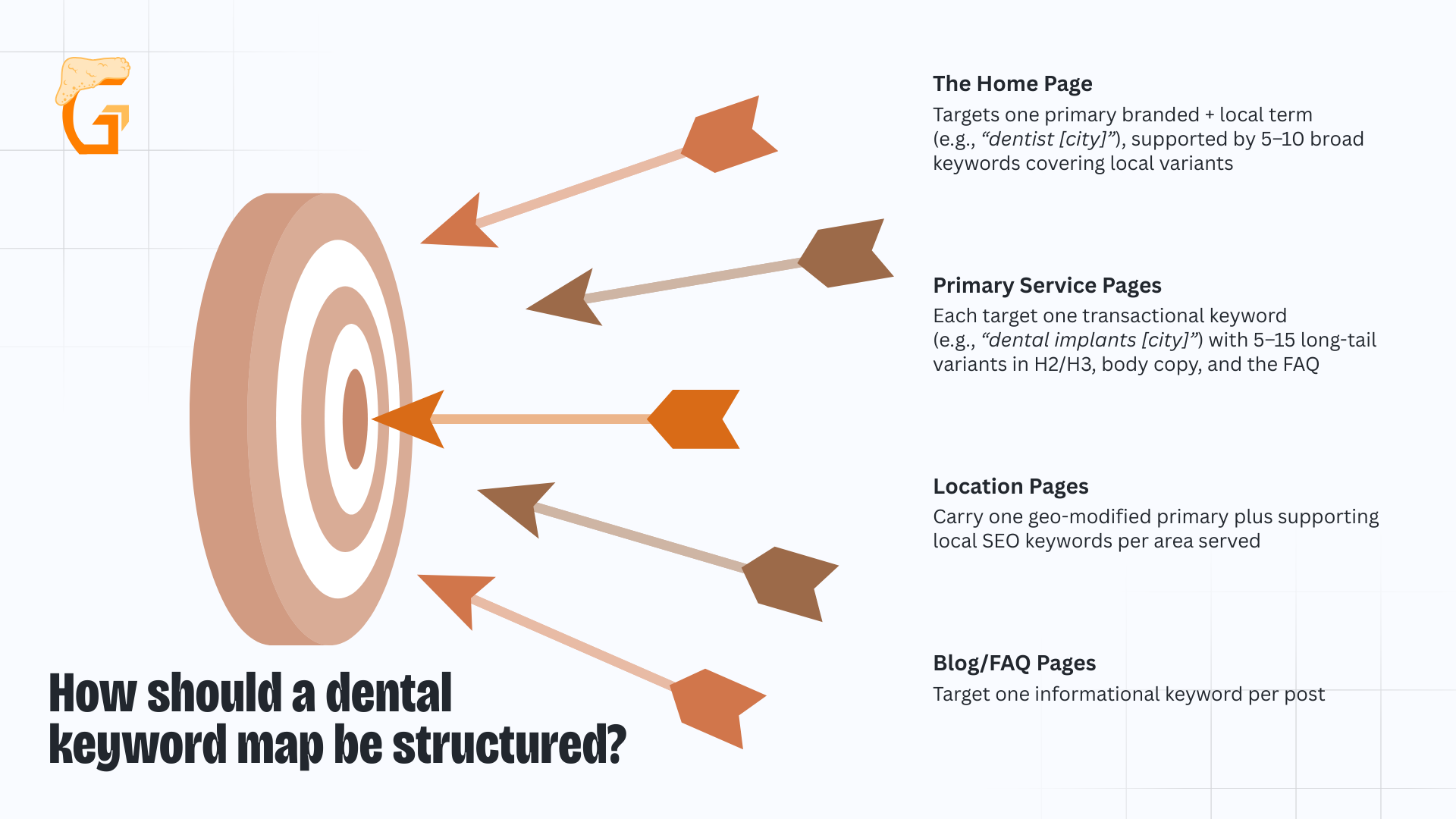



Dental keyword research identifies the local, procedure, and emergency searches prospective patients enter into search engines, then maps each term to the practice page most likely to convert it.
The deliverable is not a spreadsheet – it is a keyword-to-page assignment list.
According to SOCi’s 2024 local SEO statistics, 46% of all Google searches carry local intent, meaning geography shapes most queries a dental practice could realistically rank for.
What does keyword research mean in a dental context?
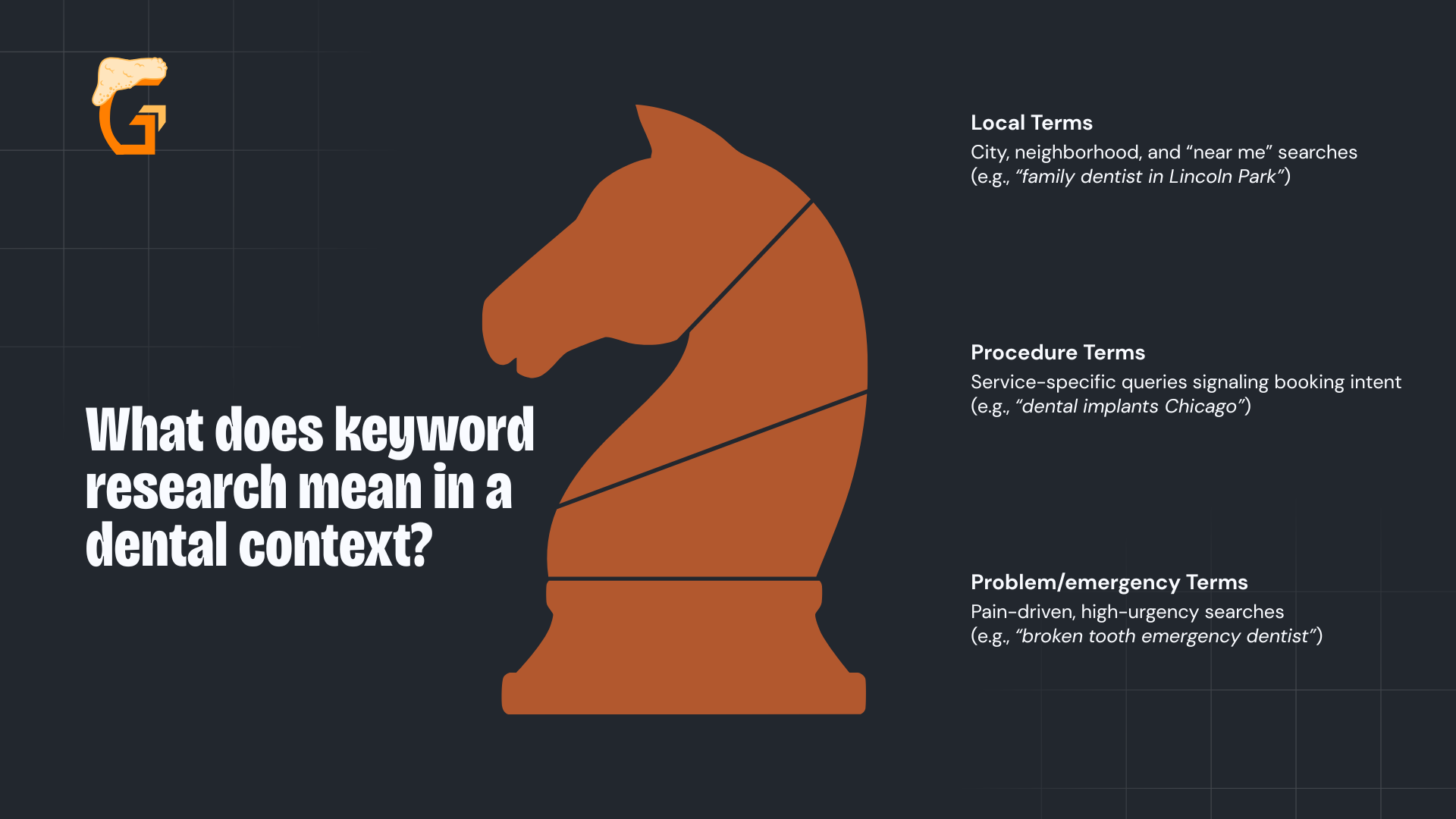
Keyword research in a dental context means generating keyword ideas from what prospective patients search for and assigning each term to the right page.
Three pillars organize every dental keyword list:
- Local terms: city, neighborhood, and “near me” searches (e.g., “family dentist in Lincoln Park”)
- Procedure terms: service-specific queries signaling booking intent (e.g., “dental implants Chicago”)
- Problem/emergency terms: pain-driven, high-urgency searches (e.g., “broken tooth emergency dentist”)
The map (not the raw list) is the actual deliverable.
Without page assignments, a spreadsheet tells you what patients search – the map tells you which page captures each one.
Why does 2026 dental search look different than past years?
Three shifts matter most.
Mobile-first near-me behavior means potential patients expect click-to-call results, not a homepage.
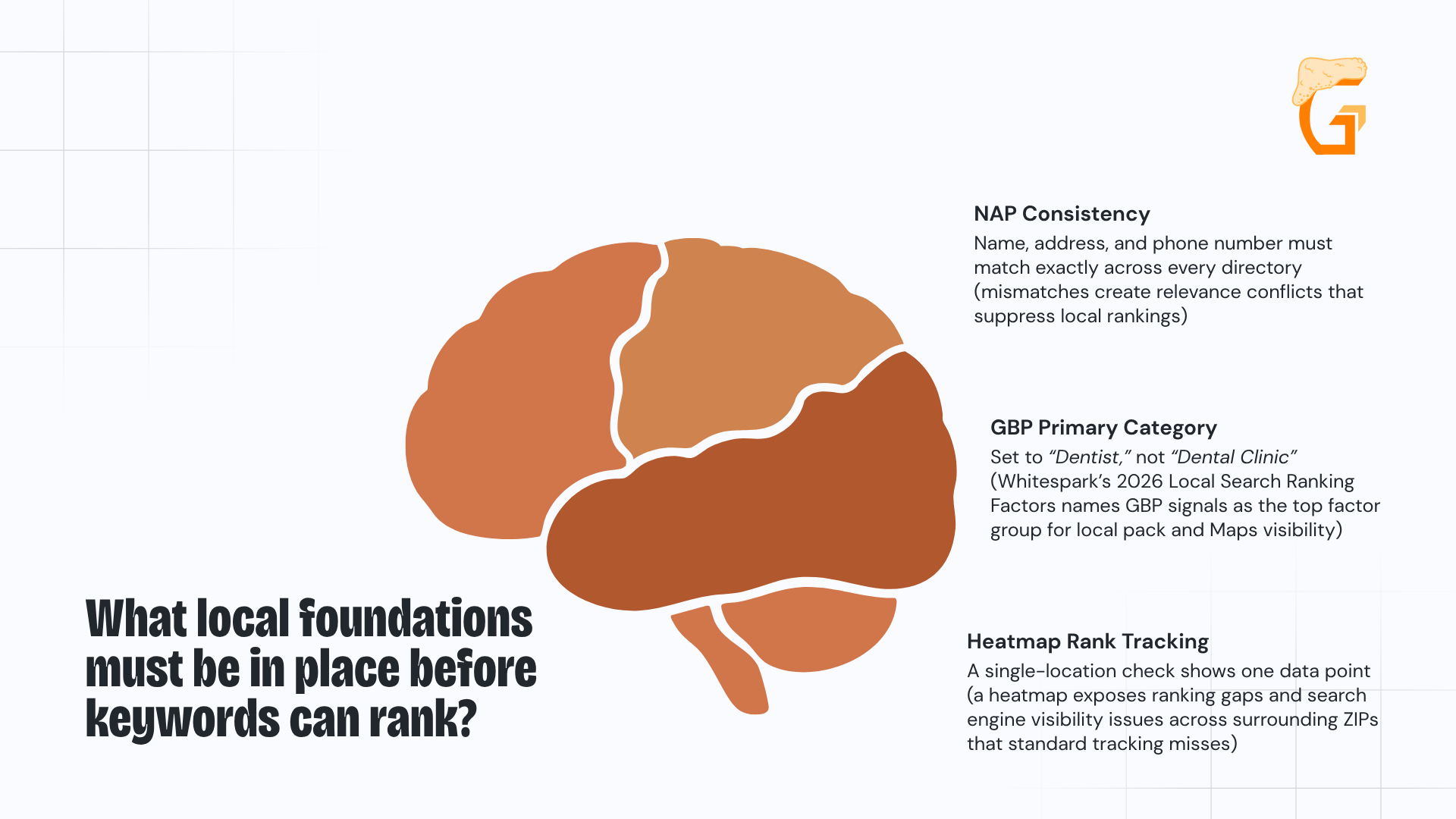
And the keyword map now underpins service pages, location pages, blog topics, and your Google Business Profile, expanding your dental practice’s online visibility – build it once and it compounds across every channel.
Whether you run a single-location practice or a multi-office group, Growth Saloon helps dental practices turn keyword research into booked appointments.
Reach out today to learn how our dental SEO services can put your practice in front of the right patients at the right time.