

E-E-A-T stands for Experience, Expertise, Authoritativeness, and Trustworthiness (Google’s framework for evaluating content quality).
Dental websites face higher scrutiny because they are YMYL (Your Money or Your Life) content.
A dental website that fails E-E-A-T evaluation by Google’s quality raters can lose search engine rankings even with good technical SEO.
The framework is drawn from the Search Quality Rater Guidelines (a human-reviewer document that trains the algorithms determining rankings, not a direct algorithmic score).
Applying the E-E-A-T principles at the pillar level is the starting point for building it systematically.
What Do the Four E-E-A-T Pillars Mean for a Dental Practice?
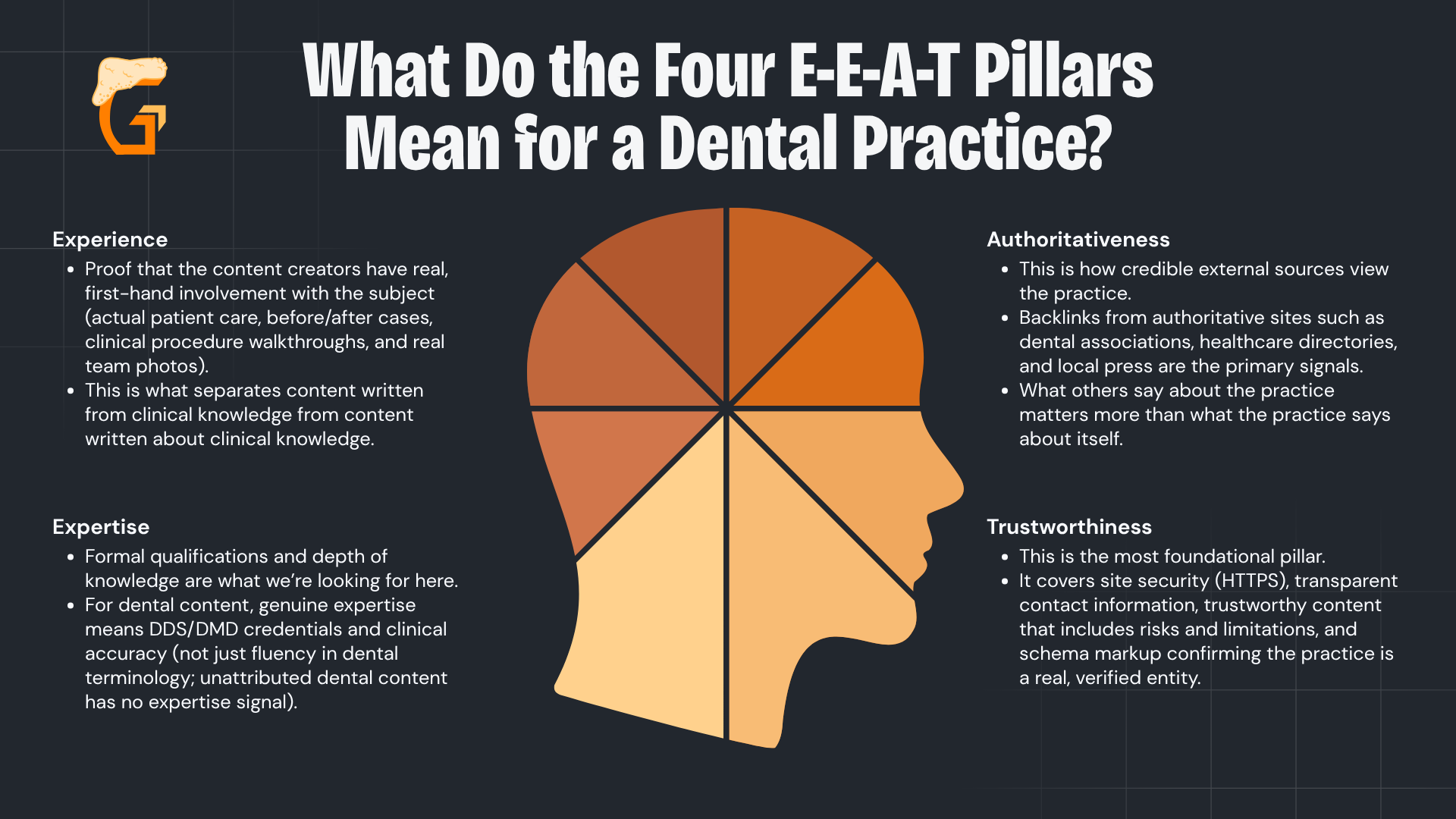
Google’s E-E-A-T guidance (drawn from its own helpful-content documentation) defines the framework as experience, expertise, authoritativeness, and trustworthiness.
Each pillar requires distinct signals in a dental context:
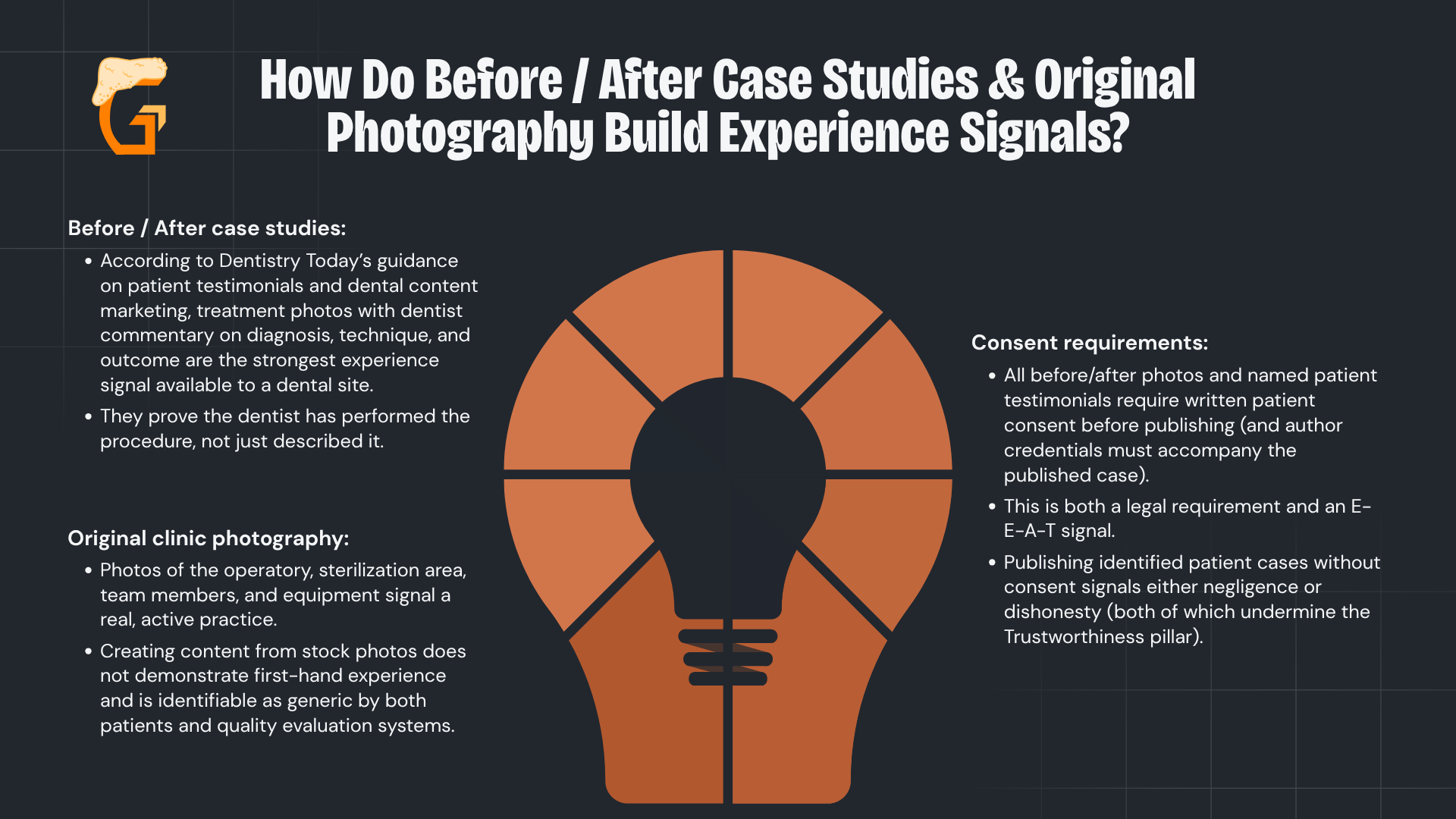
- Experience:
- Proof that the content creators have real, first-hand involvement with the subject (actual patient care, before/after cases, clinical procedure walkthroughs, and real team photos).
- This is what separates content written from clinical knowledge from content written about clinical knowledge.
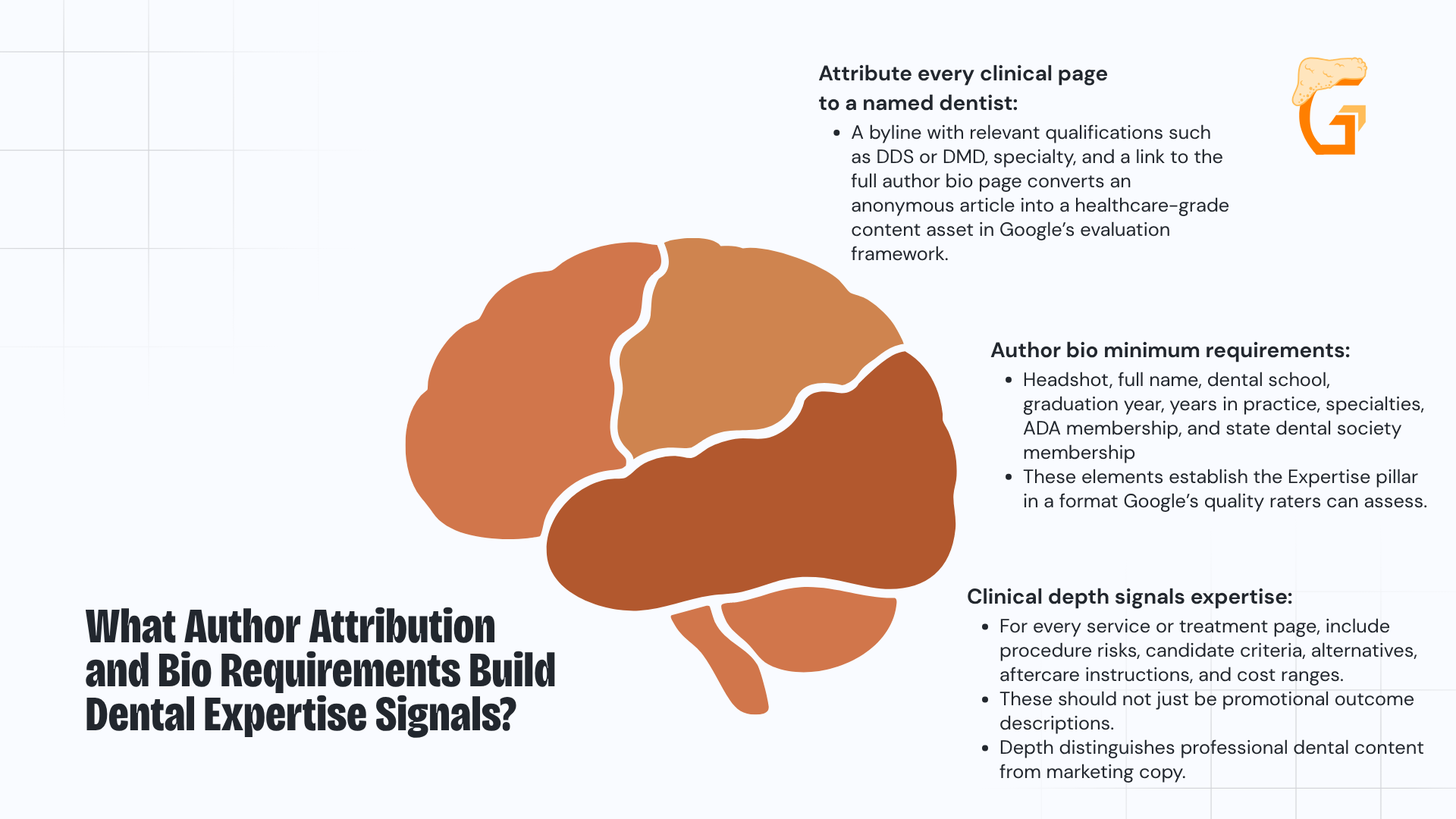
- Expertise:
- Formal qualifications and depth of knowledge are what we’re looking for here.
- For dental content, genuine expertise means DDS/DMD credentials and clinical accuracy (not just fluency in dental terminology; unattributed dental content has no expertise signal).
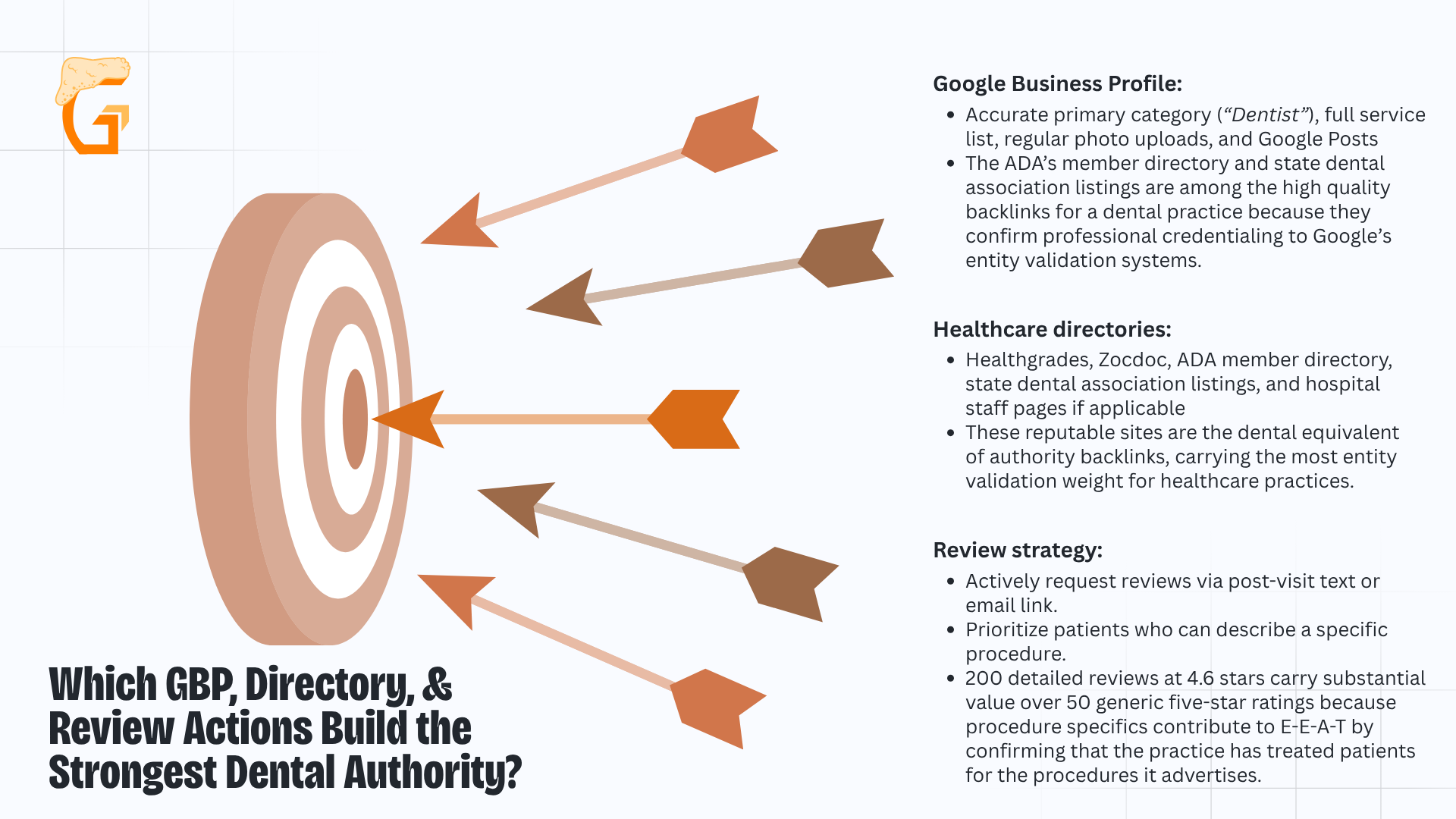
- Authoritativeness:
- This is how credible external sources view the practice.
- Backlinks from authoritative sites such as dental associations, healthcare directories, and local press are the primary signals.
- What others say about the practice matters more than what the practice says about itself.
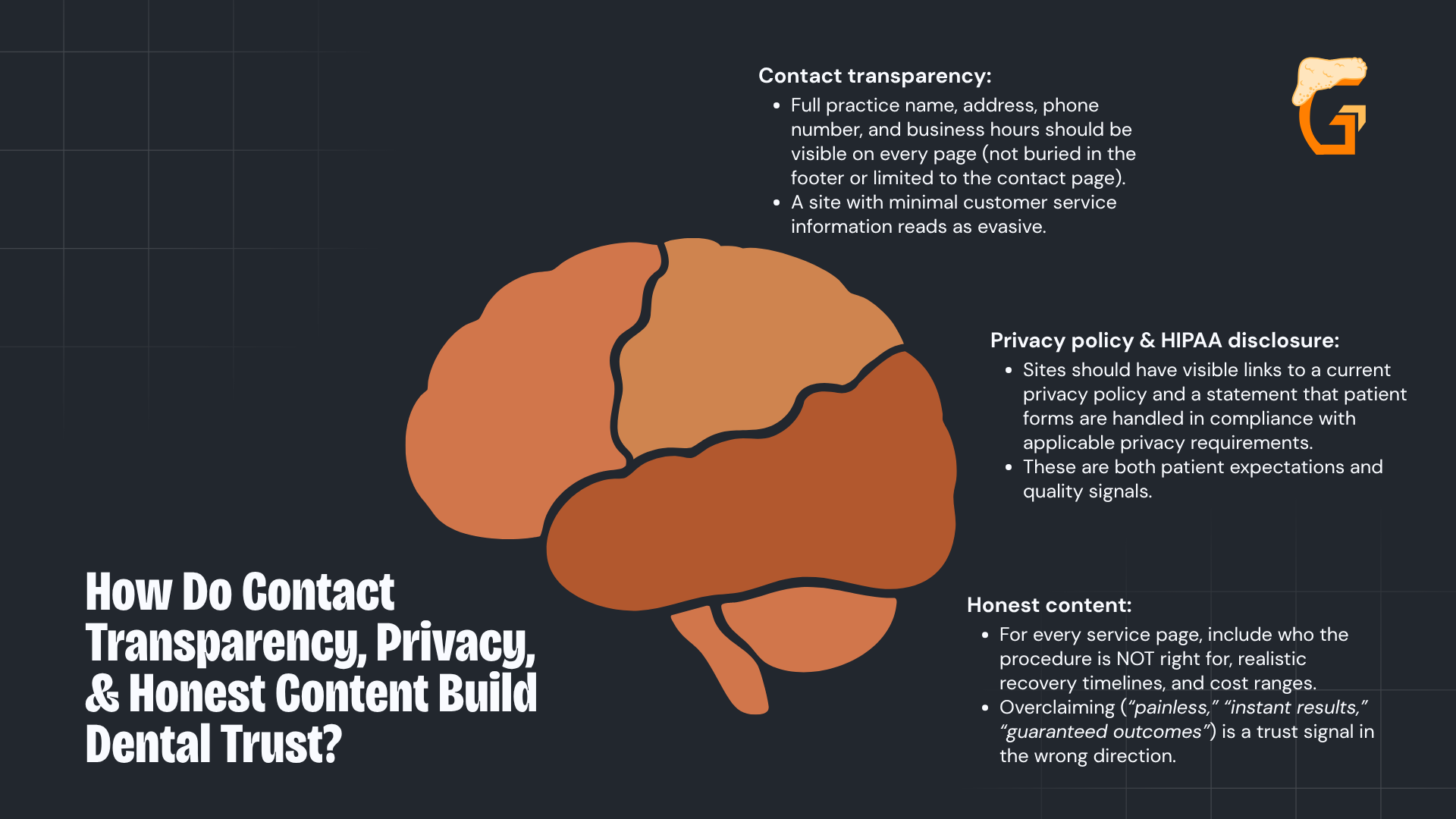
- Trustworthiness:
- This is the most foundational pillar.
- It covers site security (HTTPS), transparent contact information, trustworthy content that includes risks and limitations, and schema markup confirming the practice is a real, verified entity.
High quality content is not a scoreboard, it’s a quality threshold.
A page can pass every technical SEO check and still fail quality review if the content lacks adequate expertise or the author has no listed credentials.
Why Do Dental Websites Face a Higher E-E-A-T Standard than Most Businesses?
Dental content about treatments, costs, risks, and recovery directly affects patient health decisions (Google’s quality guidelines classify it as YMYL and apply their highest scrutiny):
- Lowest-quality risk:
- For YMYL topics, content that is inaccurate or untrustworthy can be rated as the worst possible quality designation (regardless of how it was produced.
- The algorithms trained on this feedback deprioritize pages that fail the quality standard.
- Higher bar than most local businesses:
- A restaurant can rank with anonymous content, but a dental page about implant risks or root canal procedures must have credential-backed authorship to compete at the same quality tier.
- Generalist providers routinely miss this:
- Most non-specialist SEO providers don’t create quality content with YMYL/E-E-A-T infrastructure (author attribution, clinical accuracy reviews, bio pages with credentials) built into their standard workflow.
The practical effect: a dental practice’s clinical pages compete not just against other local practices but against any page on that topic (and the YMYL bar is set by the best-credentialed content in the search engine results pages).