


Dental marketing ROI is the lifetime value of the patients a campaign brings in measured against what it cost to acquire them (a good result lands between a 3:1 and 5:1 return).
These are directional benchmarks used across the dental industry (not a single authoritative standard), but they anchor the math every practice needs to run before spending another dollar on marketing.
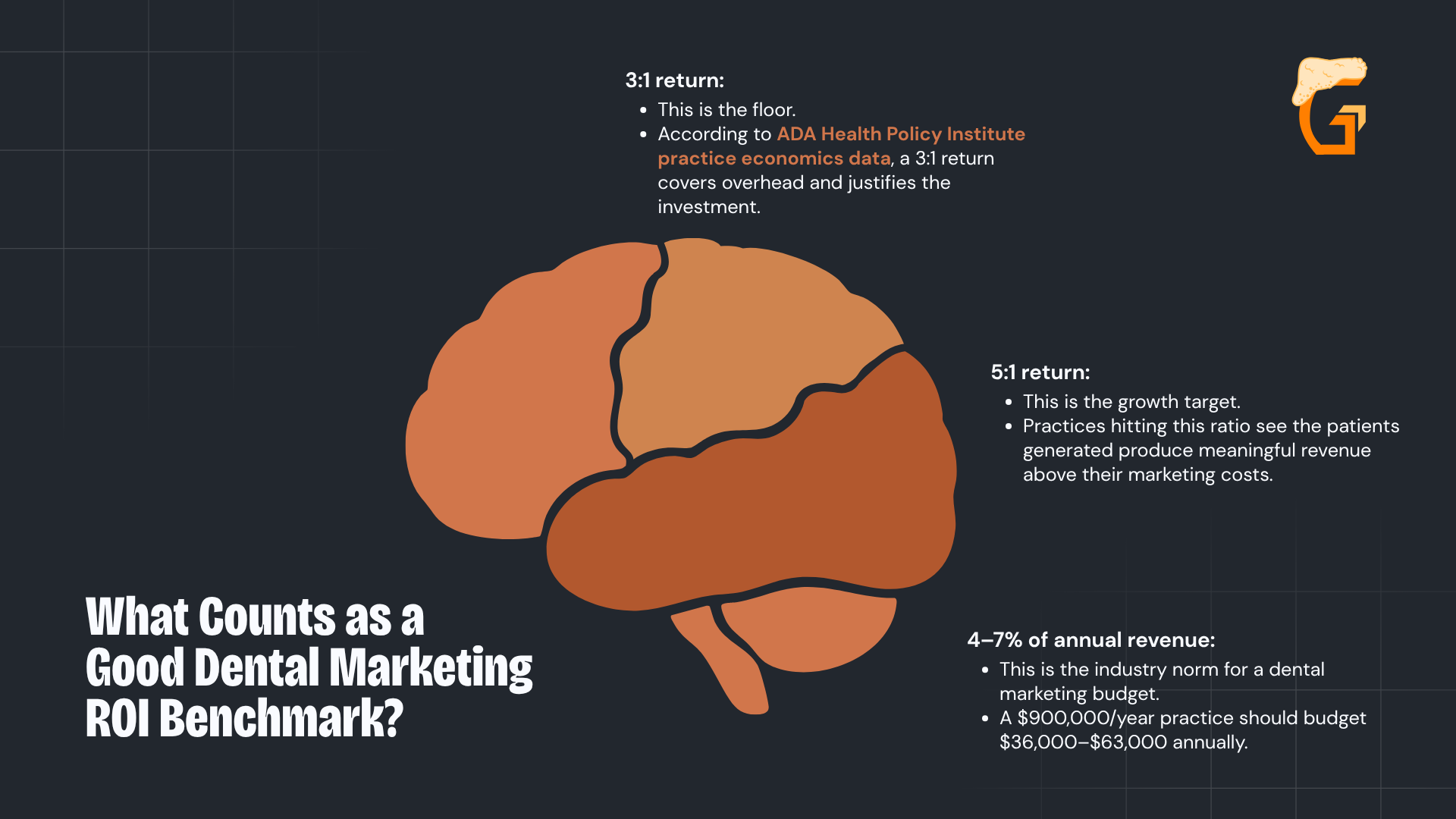
What Counts as a Good Dental Marketing ROI Benchmark?
Dental marketing ROI measures how much revenue a practice earns over a patient’s lifetime for every dollar spent acquiring that patient.
The two reference points used across the industry:
- 3:1 return:
- This is the floor.
- According to ADA Health Policy Institute practice economics data, a 3:1 return covers overhead and justifies the investment.
- 5:1 return:
- This is the growth target.
- Practices hitting this ratio see the patients generated produce meaningful revenue above their marketing costs.
- 4–7% of annual revenue:
- This is the industry norm for a dental marketing budget.
- A $900,000/year practice should budget $36,000–$63,000 annually.
These ratios are directional industry benchmarks.
The actual result for any practice varies by market, procedure mix, and how many high value patients come in for treatments like implants or cosmetic work.
Present them as targets to aim for, not guaranteed outcomes.
Why Is Dental ROI Harder to Measure than Retail ROI?
Retail sells a product – the transaction closes immediately.
Dental ROI resists a clean read for three structural reasons:
- Treatment cycles:
- A patient whose initial visit is a cleaning may not start implants or orthodontics for 12–18 months.
- That conversion is invisible in a single-month ROI snapshot.
- Insurance reimbursement lag:
- Treatment acceptance and actual revenue collection are separate events (sometimes separated by weeks of insurance processing).
- Procedure-specific variation:
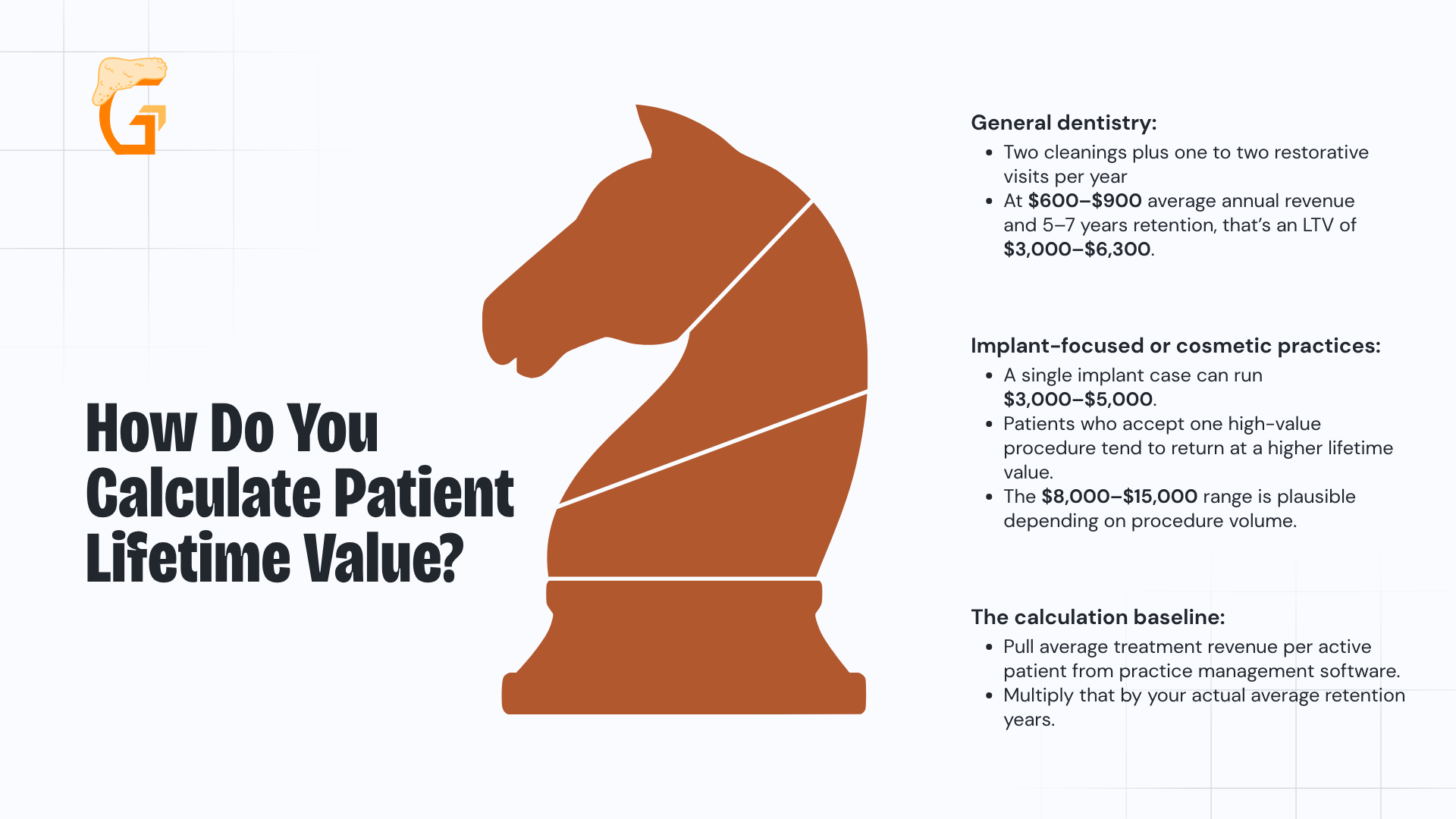
- General dentistry LTV runs $3,000–$5,000 on average.
- Implant and cosmetic patients can produce $8,000–$15,000 or more in lifetime treatment (so the same patient acquisition cost produces very different ROI depending on case mix).
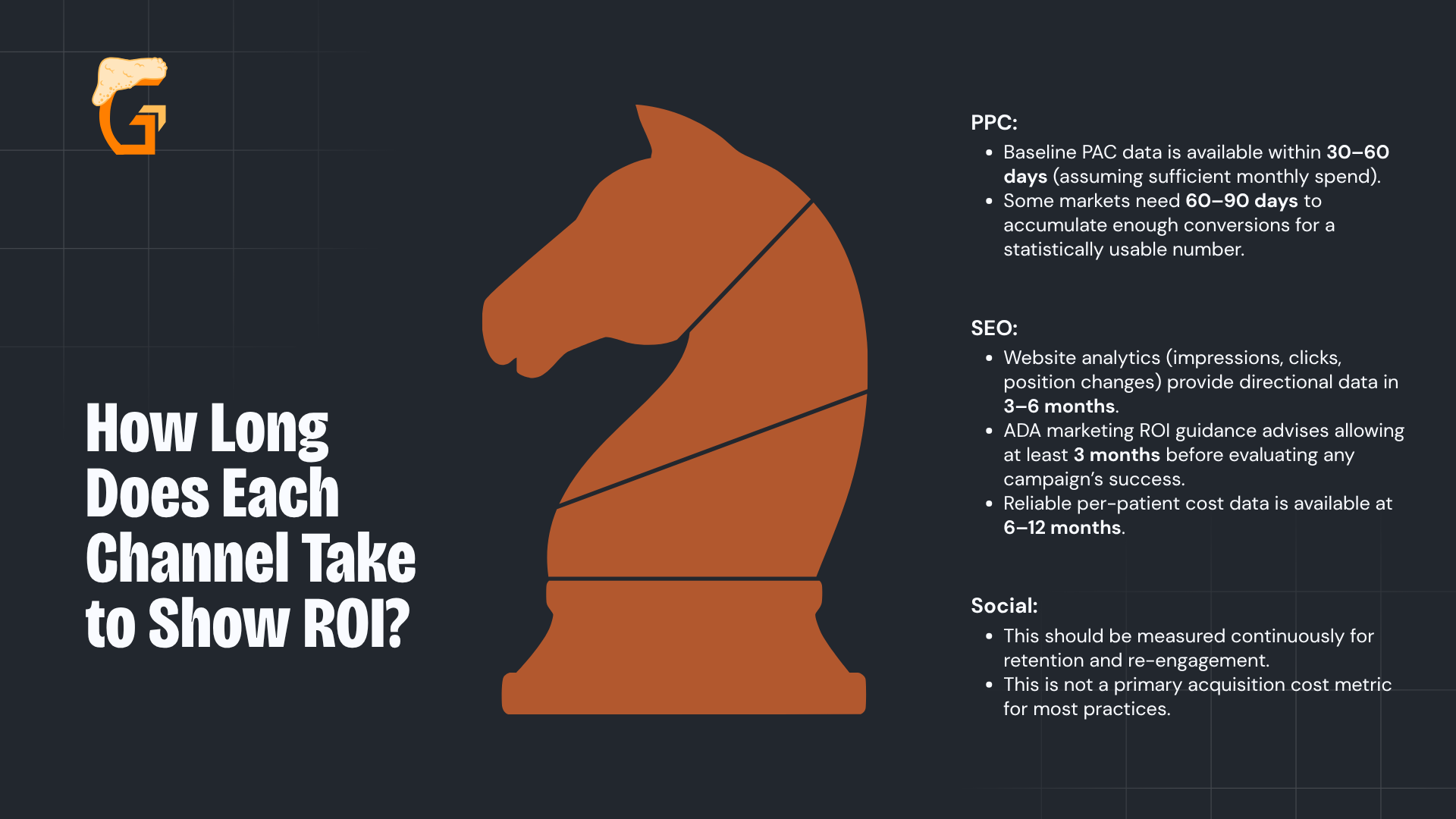
A 30-day ROI read from new marketing campaigns can mislead.
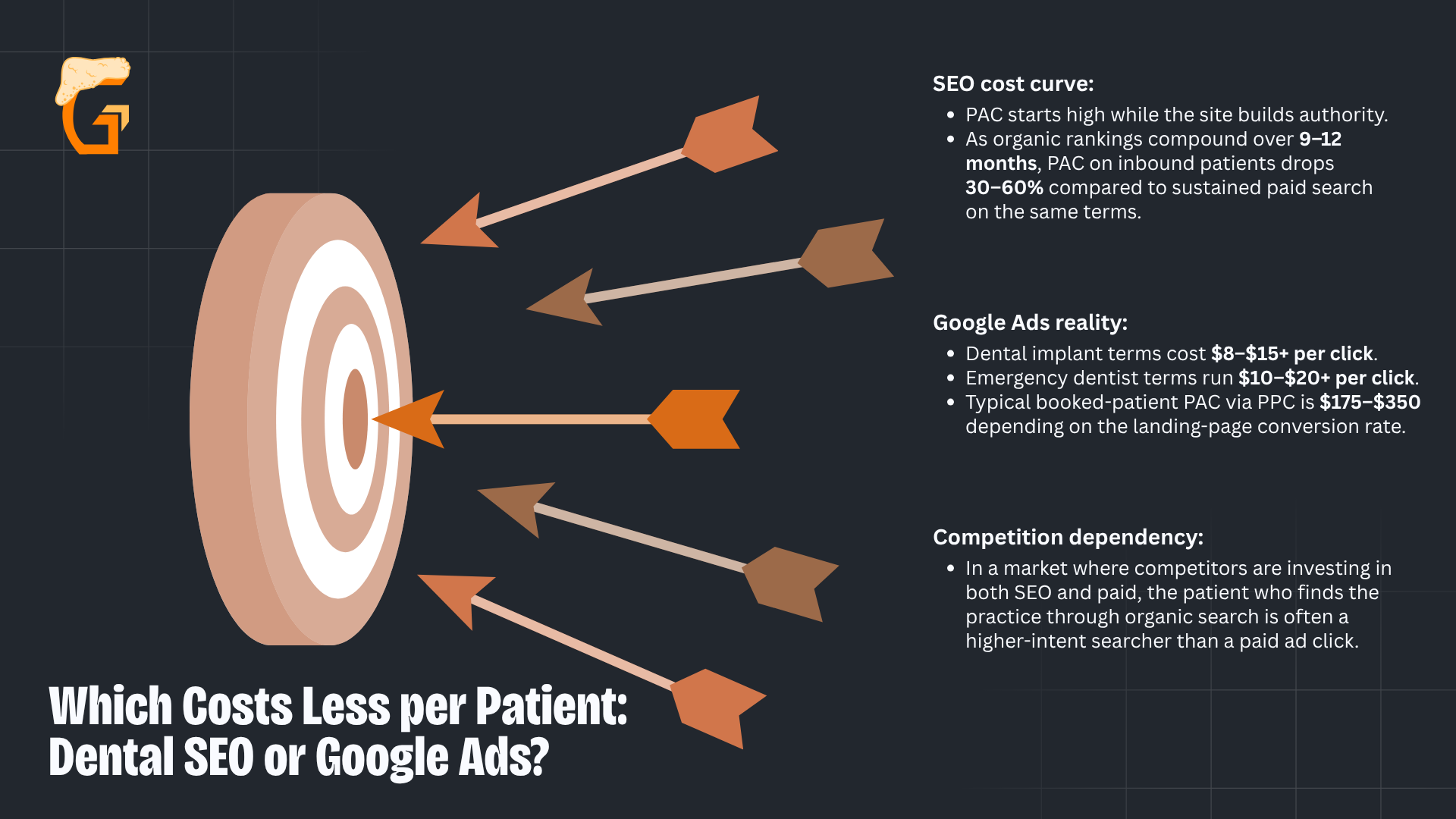
A 12-month view is the standard for an honest read on what each marketing channel actually costs per patient.