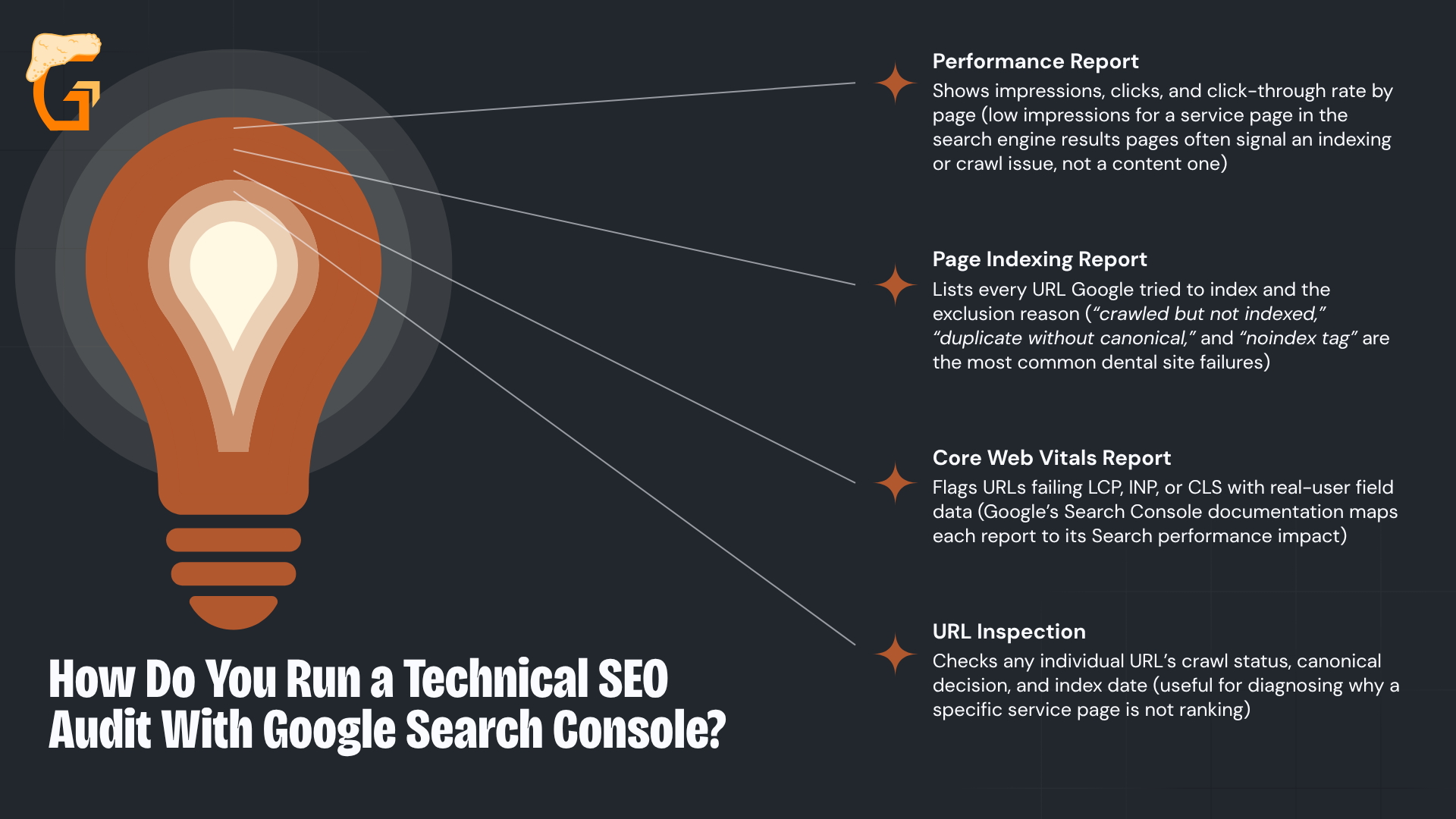



Technical SEO for dentists is the crawl-index-rank foundation (crawlability, indexing, site speed, mobile, HTTPS, schema, and architecture) that must work before content or local efforts can pay off.
Every blog post you publish and every citation you build through your dental SEO efforts sits on top of this layer.
If the foundation has problems, the floors above it do not hold.
Google defines SEO as helping search engines find and read your content – and that work starts at the technical layer.
What Does Technical SEO Cover (and How Does It Differ From On-Page and Content SEO)?
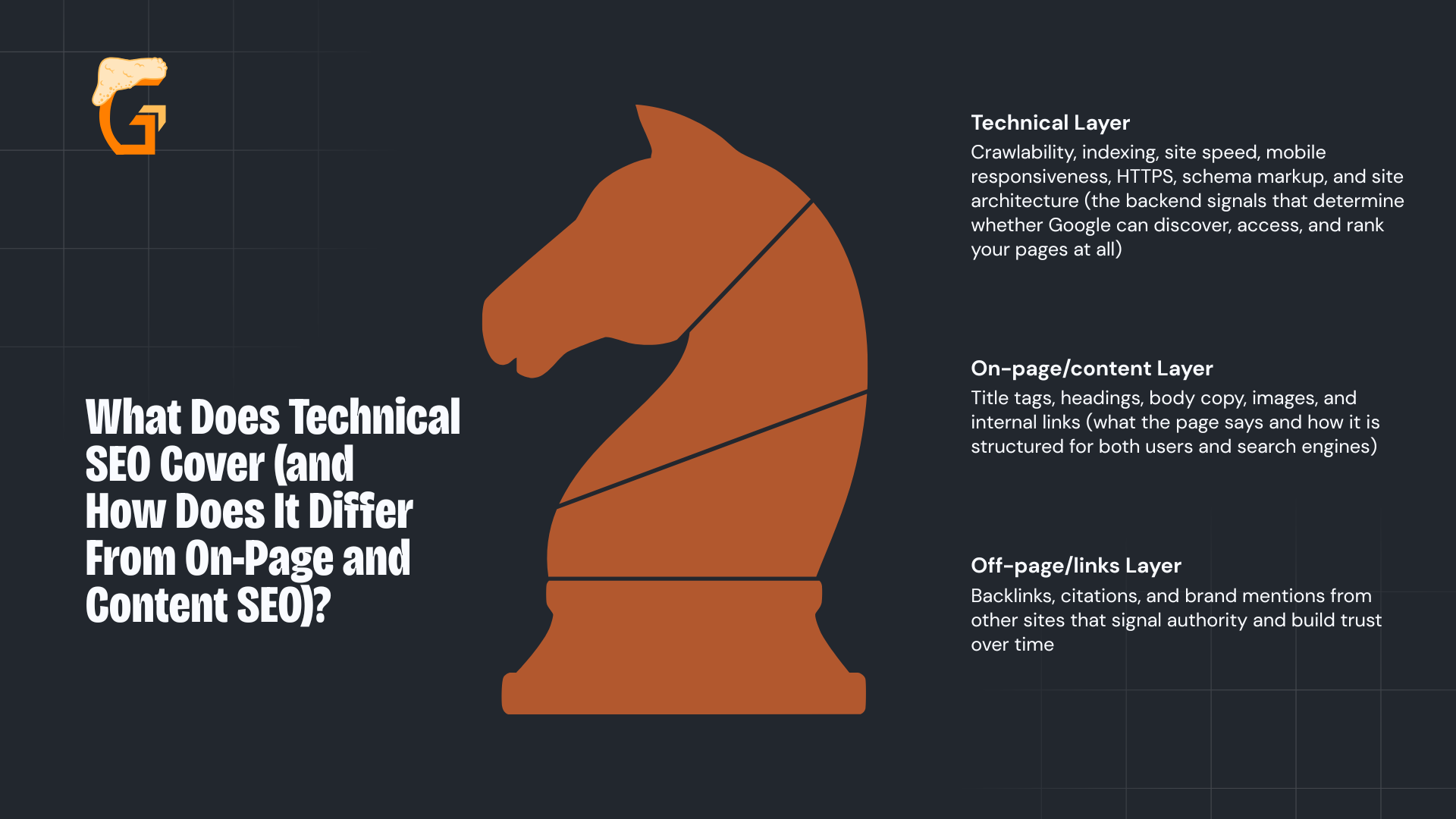
Search engine optimization (SEO) operates across three distinct layers, and technical SEO is the one that makes the other two work.
Without a crawlable, indexable foundation, on-page content and off-page authority have nowhere to land. Here is how the three layers break down:
- Technical layer: crawlability, indexing, site speed, mobile responsiveness, HTTPS, schema markup, and site architecture (the backend signals that determine whether Google can discover, access, and rank your pages at all)
- On-page/content layer: title tags, headings, body copy, images, and internal links (what the page says and how it is structured for both users and search engines)
- Off-page/links layer: backlinks, citations, and brand mentions from other sites that signal authority and build trust over time
The layering matters because SEO for dental practices covers all three, and technical SEO is its backbone.
You can produce quality website content and earn backlinks from respected dental associations, but if Googlebot is blocked by a misconfigured robots.txt or your site fails Core Web Vitals, none of it appears in search results.
How Do Search Engines Decide Your Rankings, and Where Does Dental SEO Fit?
Search visibility for dental practices comes down to volume, local intent, and whether Google can access the site at all.
Technical health determines all three:
- Google processes more than 5 trillion searches per year (roughly 13–14 billion per day) making organic search visibility a volume game where small ranking gains translate to real appointment increases
- A figure Google cited in 2018 put roughly 46% of all searches at local intent, meaning a large share of people who find local dental services want one nearby (making local-pack visibility as valuable as broad organic rankings)
- Technical health is the prerequisite (Google cannot rank what it cannot crawl, index, or load quickly, regardless of content quality or backlink profile)
That local-intent figure is why dental practices compete hard for map-pack placement alongside broad organic rankings.
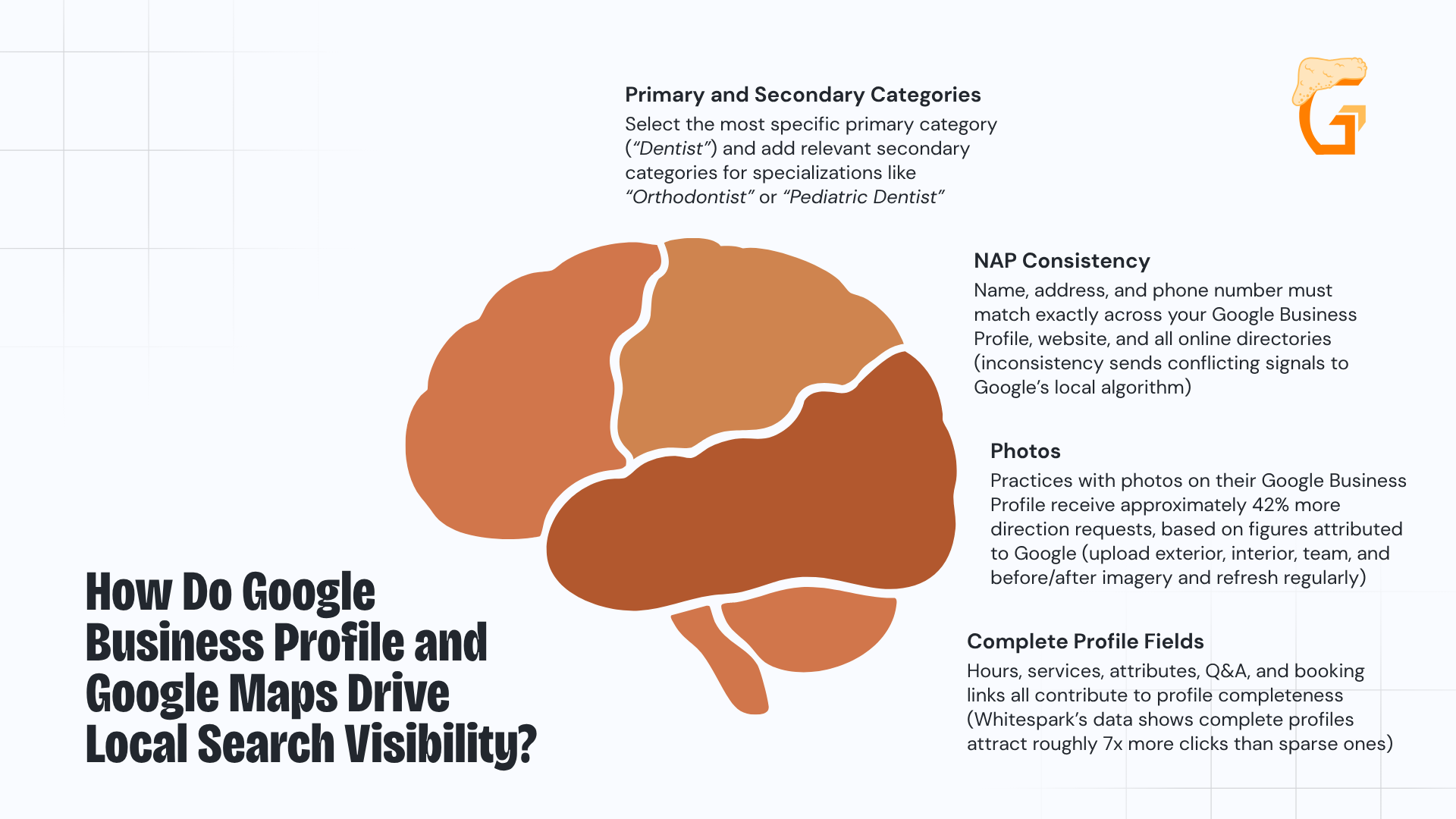
Map-pack visibility also depends on technical health – your Google Business Profile data is crawled and indexed, and a slow or error-ridden site undermines your online visibility and every local signal you send.
How Do Search Engines Crawl, Index, and Rank Dental Practice Websites?
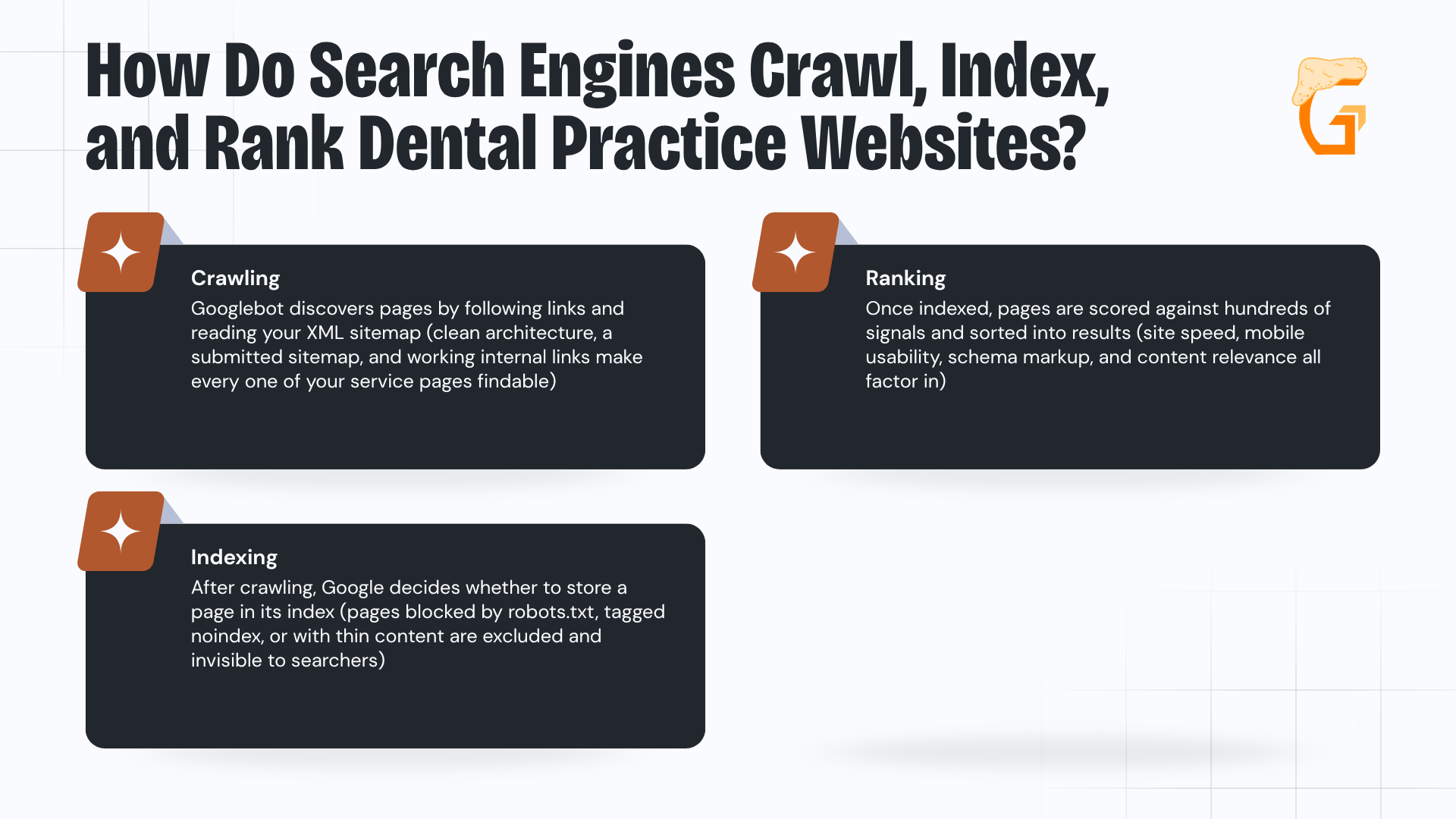
Google runs every dental website through a sequence of gates before it ever appears in search results, and skipping one stage stops everything after it.
Here is what happens at each step:
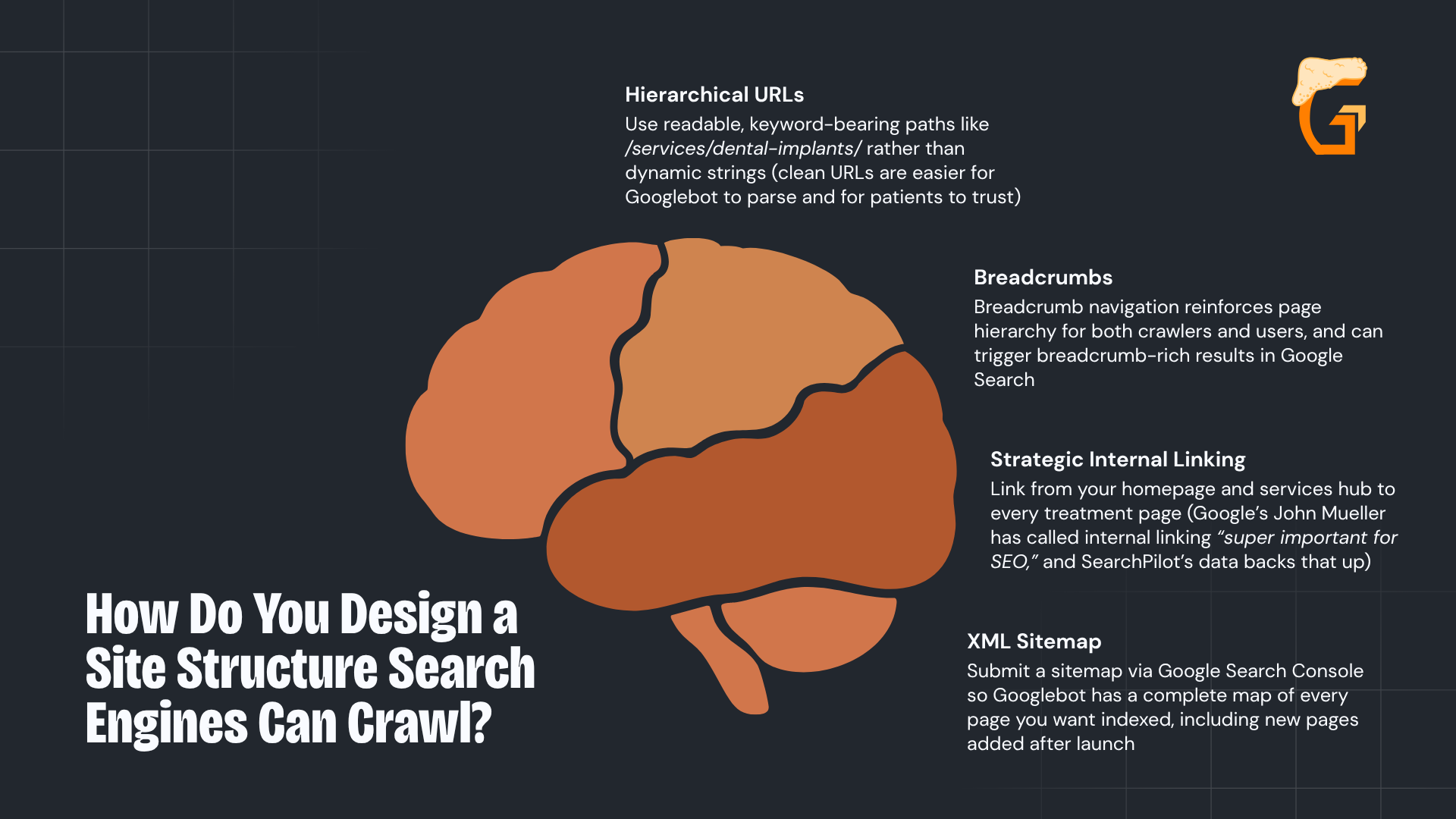
- Crawling: Googlebot discovers pages by following links and reading your XML sitemap (clean architecture, a submitted sitemap, and working internal links make every one of your service pages findable)
- Indexing: after crawling, Google decides whether to store a page in its index (pages blocked by robots.txt, tagged noindex, or with thin content are excluded and invisible to searchers)
- Ranking: once indexed, pages are scored against hundreds of signals and sorted into results (site speed, mobile usability, schema markup, and content relevance all factor in)
Google’s documentation confirms that crawling, indexing, and serving results are the three stages of how Search works (and every content and local effort you make depends on clearing all three).
With roughly 46% of all searches carrying local intent, a crawl or indexing failure is not just a technical issue.
For a dental practice, it is a direct patient-acquisition problem.
Growth Saloon helps dental practices build the technical foundation that turns search visibility into new patient appointments.
Our team audits your site’s crawlability, indexing, and architecture so you can start ranking for the searches that drive bookings – explore our dental SEO services to see how we do it.