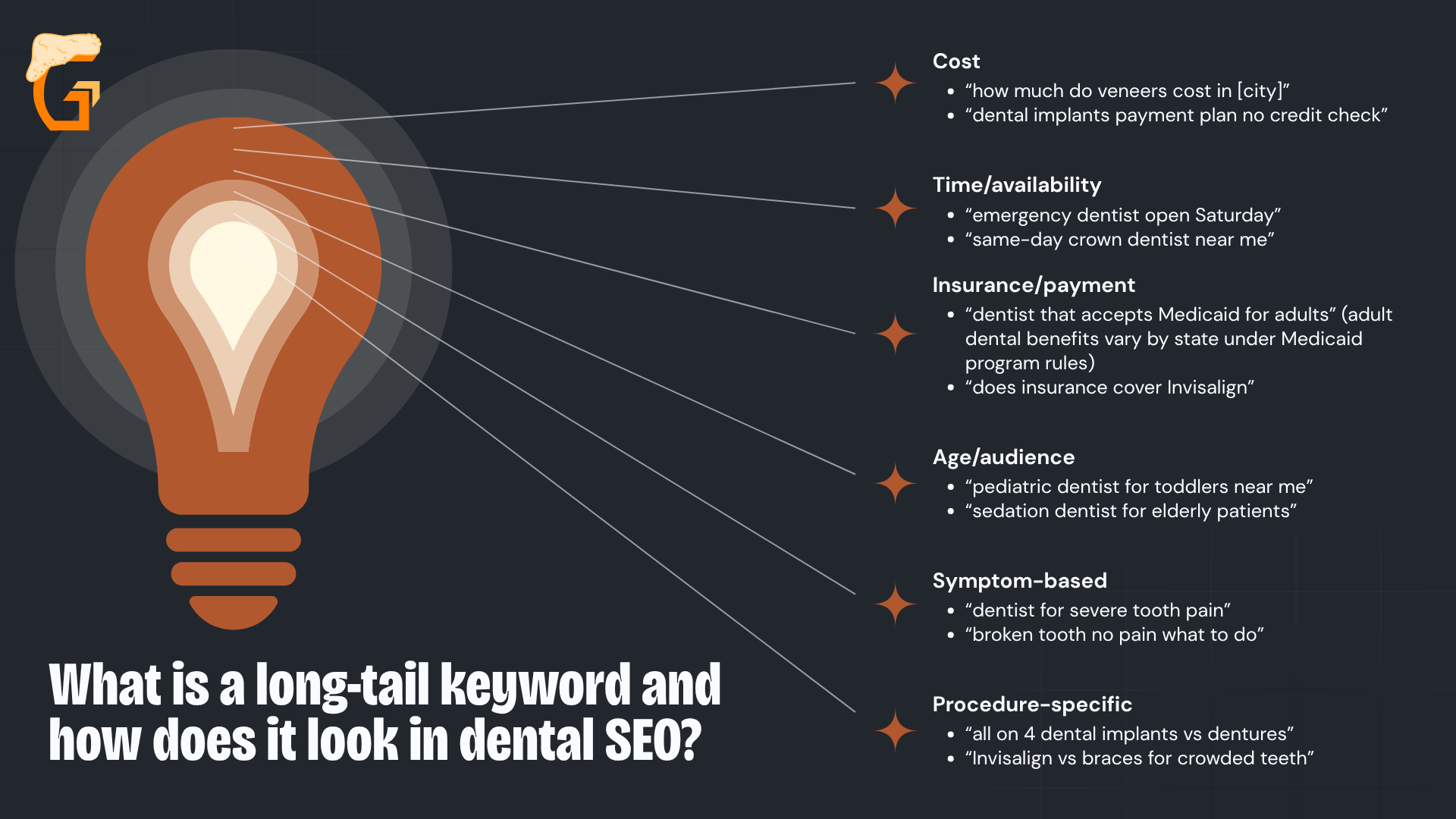
The best long-tail dental keyword examples cluster around procedure, modifier type, and location (each cluster maps to one page).
Six service categories of high value keywords follow with representative long-tails and a deployment note.
Dental implants long-tail cluster examples
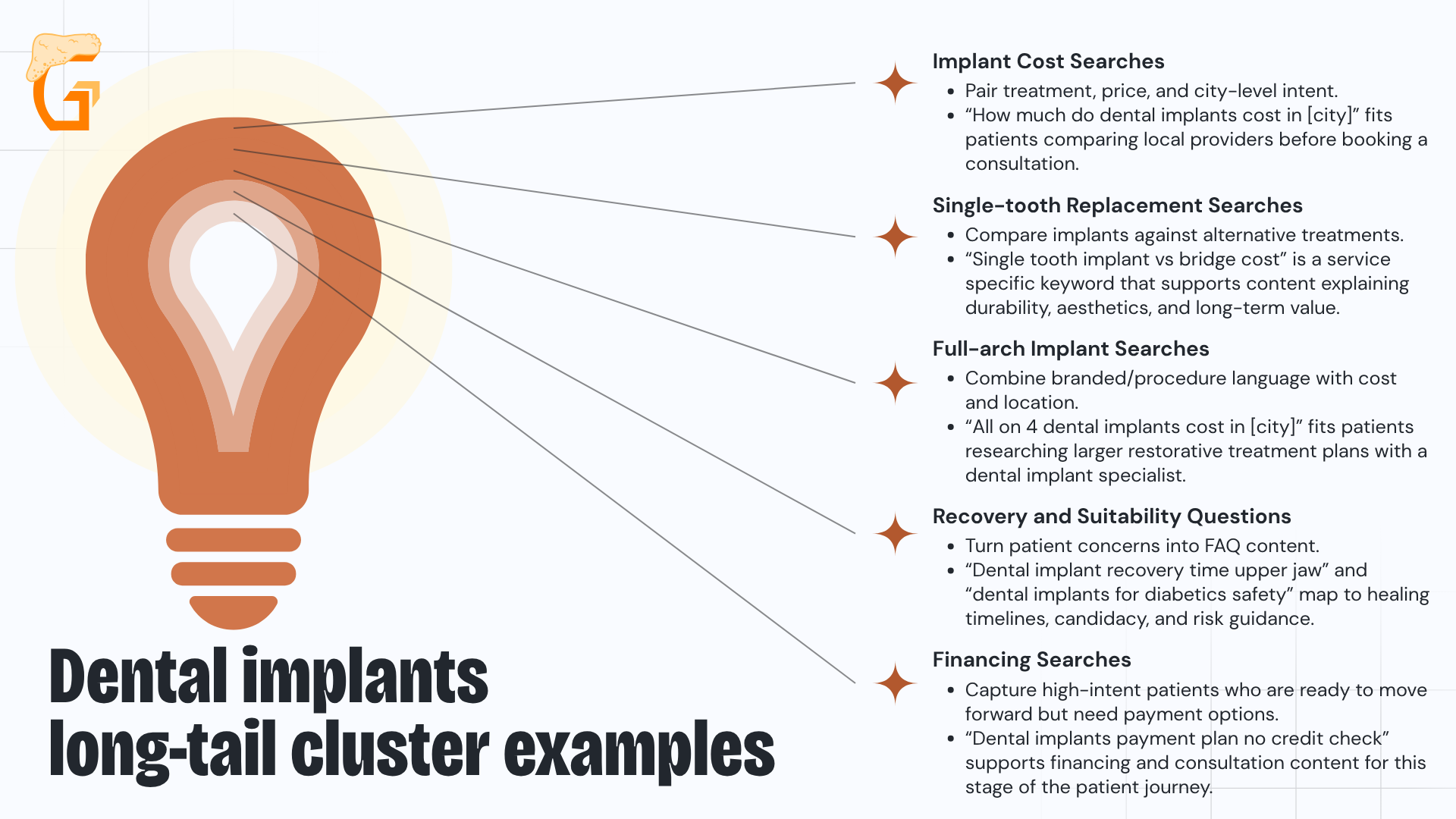
Dental implants are a high-value procedure category, where patients often search with cost, procedure type, recovery, and financing intent.
Relevant searches in this implant cluster often combine procedure, price, location, and candidacy language:
- Implant cost searches: Pair treatment, price, and city-level intent. “How much do dental implants cost in [city]” fits patients comparing local providers before booking a consultation.
- Single-tooth replacement searches: Compare implants against alternative treatments. “Single tooth implant vs bridge cost” is a service specific keyword that supports content explaining durability, aesthetics, and long-term value.
- Full-arch implant searches: Combine branded/procedure language with cost and location. “All on 4 dental implants cost in [city]” fits patients researching larger restorative treatment plans with a dental implant specialist.
- Recovery and suitability questions: Turn patient concerns into FAQ content. “Dental implant recovery time upper jaw” and “dental implants for diabetics safety” map to healing timelines, candidacy, and risk guidance.
- Financing searches: Capture high-intent patients who are ready to move forward but need payment options. “Dental implants payment plan no credit check” supports financing and consultation content for this stage of the patient journey.
Deploy on the dental implants service page with FAQ blocks covering cost, recovery, candidacy, and financing.
Invisalign long-tail cluster examples
Invisalign is a strong commercial-intent category, especially for adults comparing treatment cost, timelines, insurance, and alternatives.
Searches in this Invisalign cluster often combine treatment, price, age group, and comparison language:
- Adult cost searches: Pair treatment, audience, and location language. “Invisalign cost for adults in [city]” fits patients looking for clear pricing before scheduling.
- Treatment comparison searches: Capture patients weighing orthodontic options. “Invisalign vs braces cost comparison” supports content that explains price, convenience, appearance, and treatment fit.
- Insurance coverage searches: Connect payment questions with geographic intent. “Does insurance cover Invisalign in [state]” maps to FAQ content on benefits, coverage limits, and financing.
- Provider-intent searches: Capture patients close to booking. “Best dentist for Invisalign for adults near me” supports local authority, reviews, and consultation-focused content.
- Condition and timeline questions: Turn pre-treatment concerns into FAQ content. “Invisalign for crowded teeth adults” and “how long does Invisalign take for mild crowding” map to candidacy, treatment planning, and expected timelines.
Anchor on the Invisalign service page with FAQ blocks covering cost, insurance, treatment comparison, candidacy, and timeline.
Emergency dentist long-tail cluster examples
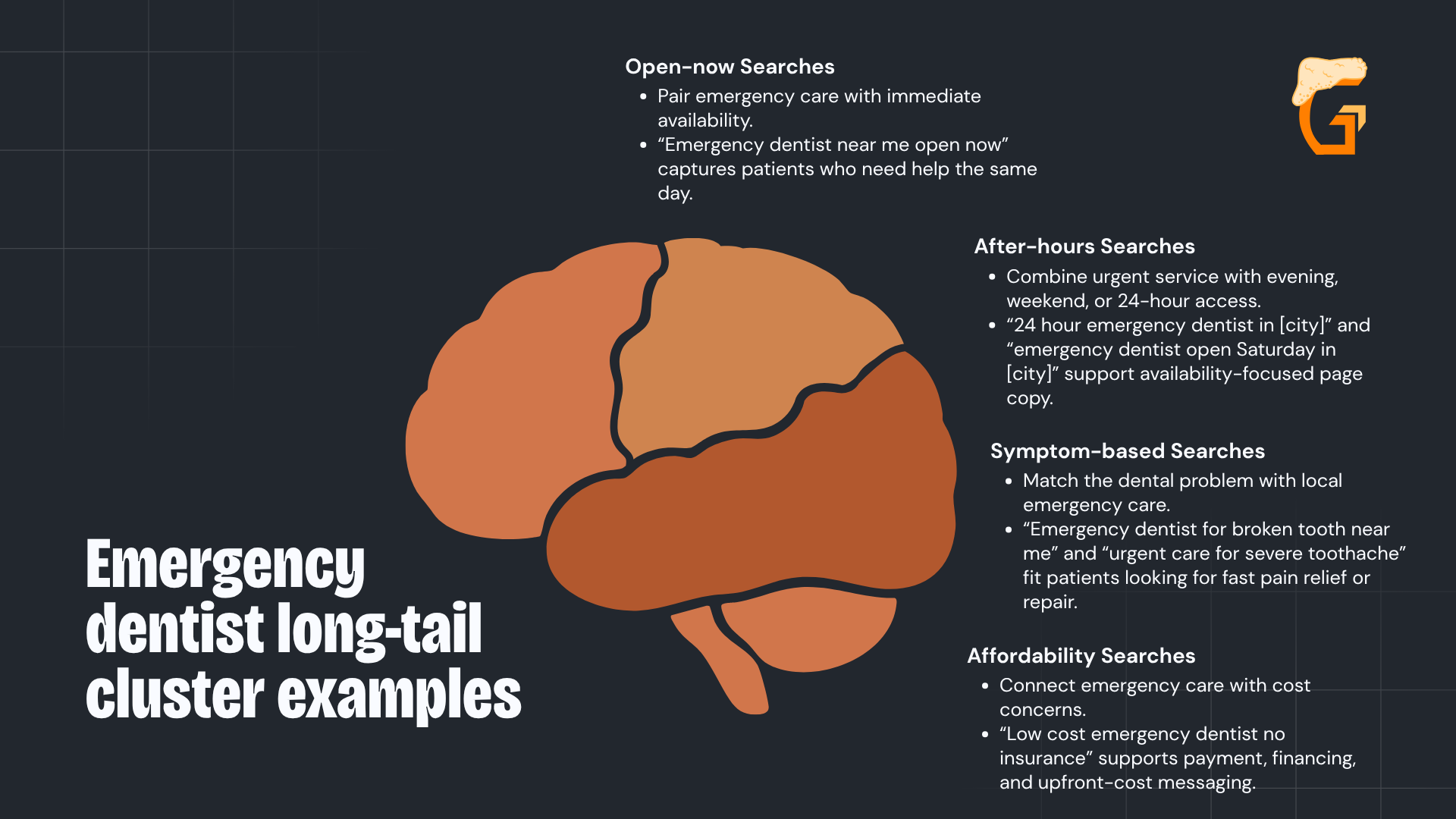
Emergency terms convert fastest because intent is immediate.
CDC data shows roughly 59 emergency department visits per 10,000 people per year for tooth disorders – a steady stream of high-urgency searchers who would prefer a dental office over an ED if they can find one fast.
Emergency-intent searches tend to focus on urgency, availability, and cost:
- Open-now searches: Pair emergency care with immediate availability. “Emergency dentist near me open now” captures patients who need help the same day.
- After-hours searches: Combine urgent service with evening, weekend, or 24-hour access. “24 hour emergency dentist in [city]” and “emergency dentist open Saturday in [city]” support availability-focused page copy.
- Symptom-based searches: Match the dental problem with local emergency care. “Emergency dentist for broken tooth near me” and “urgent care for severe toothache” fit patients looking for fast pain relief or repair.
- Affordability searches: Connect emergency care with cost concerns. “Low cost emergency dentist no insurance” supports payment, financing, and upfront-cost messaging.
The emergency page must back each term with practical content: hours, same-day availability, and after-hours phone.
Pediatric dentist long-tail cluster examples
Pediatric terms stack age, special needs, and preventive procedures.
The CDC recommends children visit a dentist by their first birthday (a guideline that fuels the steady “first dentist appointment” and “fluoride treatment” query patterns parents type).
Parent search patterns in this cluster often include age, anxiety, access, and special-care needs:
- New-patient searches: Combine specialty, proximity, and availability. “Pediatric dental clinic near me accepting new patients” fits parents ready to schedule.
- Weekend access searches: Pair kids dentistry with flexible appointment timing. “Kids dentist in [city] with Saturday hours” supports content for parents balancing school and work schedules.
- Anxiety and special-care searches: Name the child’s care need directly. “Pediatric dentist for anxious kids” and “gentle kids dentist specializing in autism” map to comfort-focused, sensory-aware language.
- First-visit searches: Turn milestone questions into educational content. “Baby’s first dentist appointment what to expect” fits first-visit guides and parent FAQ blocks.
Deploy on the pediatric service page with a FAQ on first visits, insurance, and preventive care.
Cosmetic and teeth whitening long-tail cluster examples
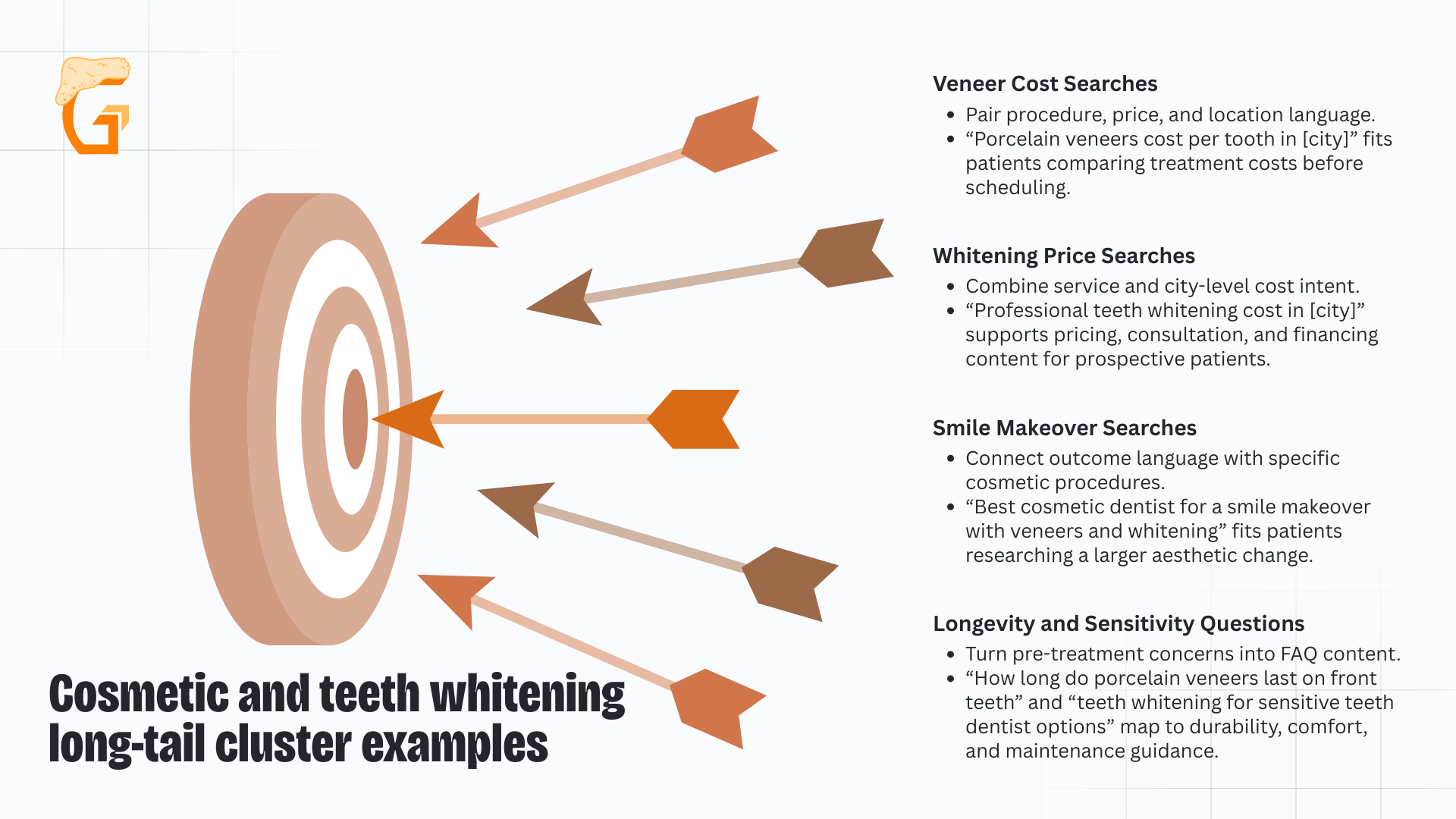
Cosmetic and whitening are the discretionary-spend category, combining outcome intent with specific cost questions.
Searches in this cosmetic cluster often combine procedure, price, and outcome language:
- Veneer cost searches: Pair procedure, price, and location language. “Porcelain veneers cost per tooth in [city]” fits patients comparing treatment costs before scheduling.
- Whitening price searches: Combine service and city-level cost intent. “Professional teeth whitening cost in [city]” supports pricing, consultation, and financing content for prospective patients.
- Smile makeover searches: Connect outcome language with specific cosmetic procedures. “Best cosmetic dentist for a smile makeover with veneers and whitening” fits patients researching a larger aesthetic change.
- Longevity and sensitivity questions: Turn pre-treatment concerns into FAQ content. “How long do porcelain veneers last on front teeth” and “teeth whitening for sensitive teeth dentist options” map to durability, comfort, and maintenance guidance.
Support cosmetic marketing strategies by deploying these terms on the service page with before/after photos and FAQ blocks on longevity.
Growth Saloon maps long-tail keyword clusters to every revenue-driving procedure on your dental site, from implants to cosmetic and emergency.
Get in touch today to find out how our long-tail keyword services for dentists can turn your service pages into high-intent patient magnets.