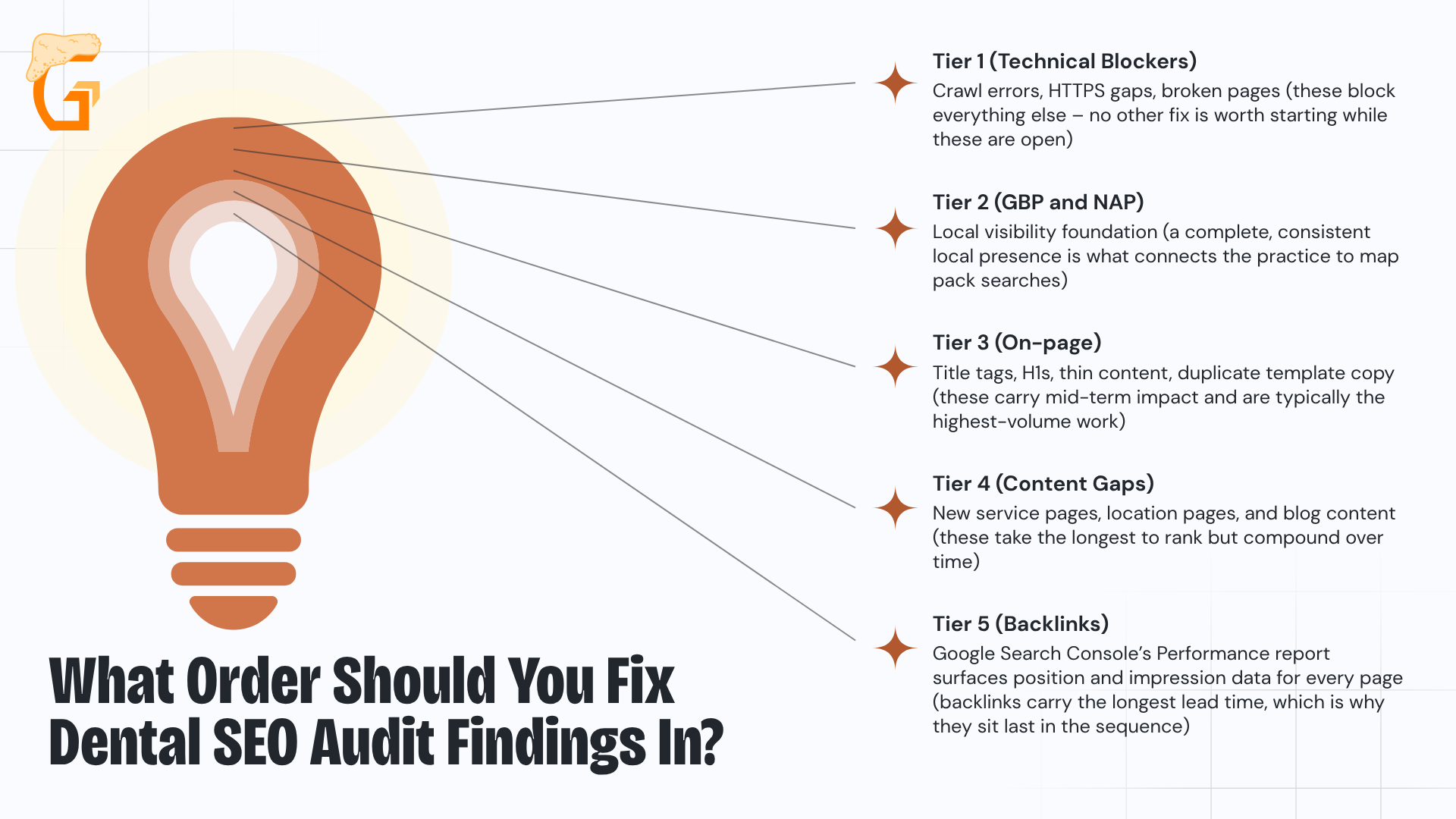


A dental SEO audit covers five areas (technical site health, on-page optimization, local SEO, content quality, and backlinks/analytics) and produces a prioritized action list, not a static report.
The value is in turning findings into a content strategy that fixes what matters most, not just surfacing a list nobody acts on.
What Are the Five Areas a Dental SEO Audit Reviews?
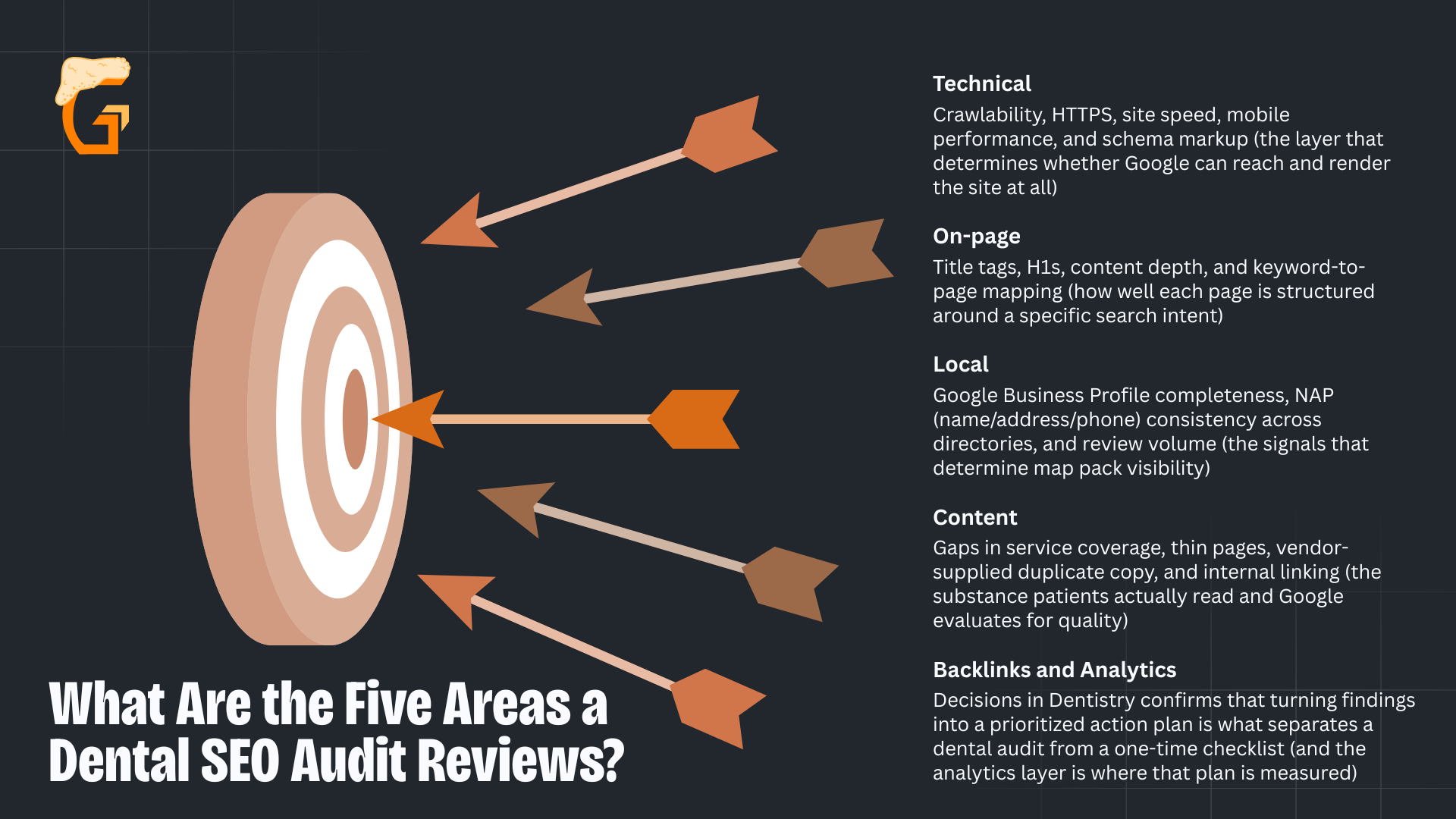
Each of the five audit areas catches a different category of problem.
Together, they give a complete picture of why a dental site does or does not drive traffic.
A dental SEO audit reviews these areas:
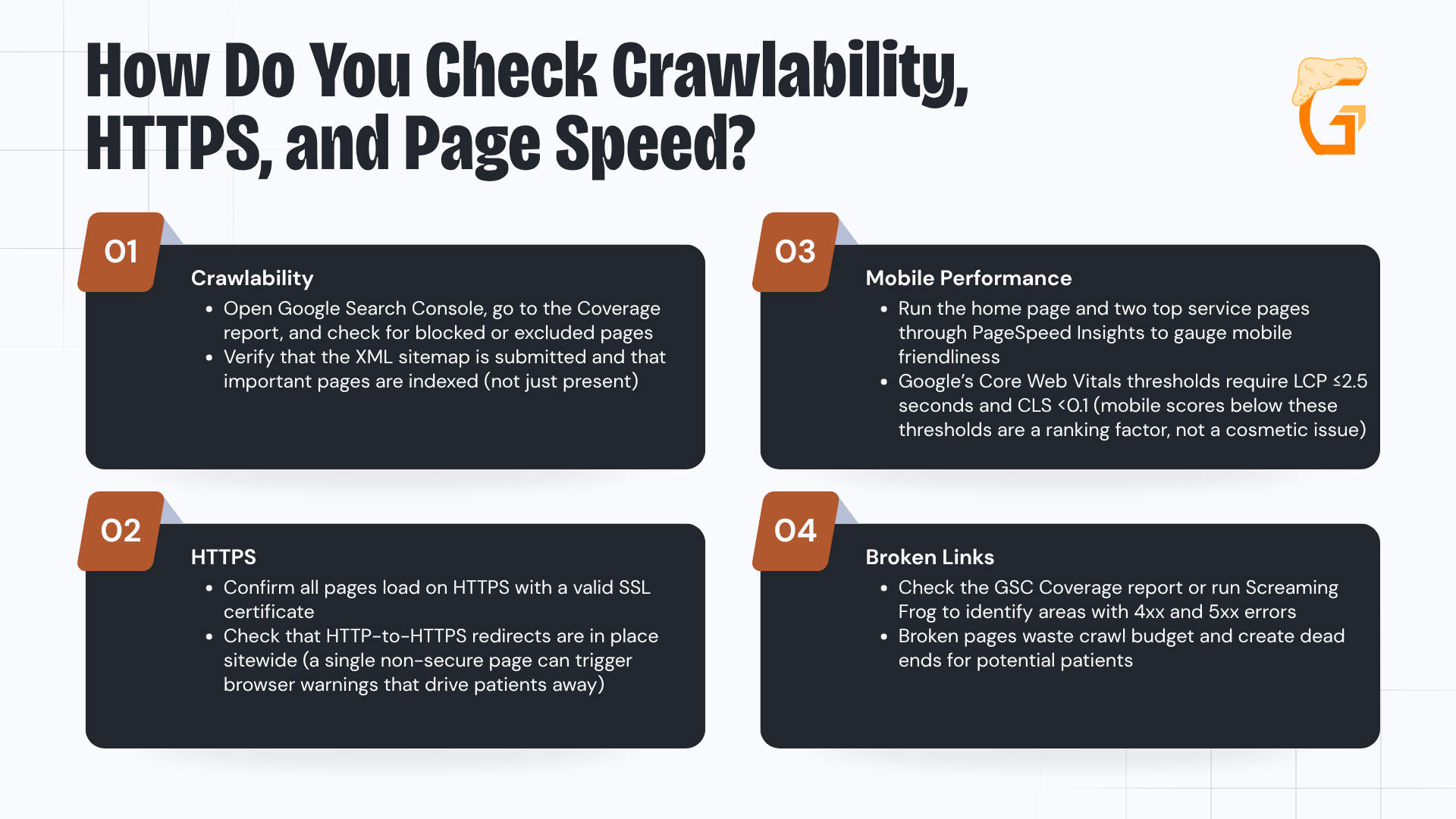
- Technical: crawlability, HTTPS, site speed, mobile performance, and schema markup (the layer that determines whether Google can reach and render the site at all)
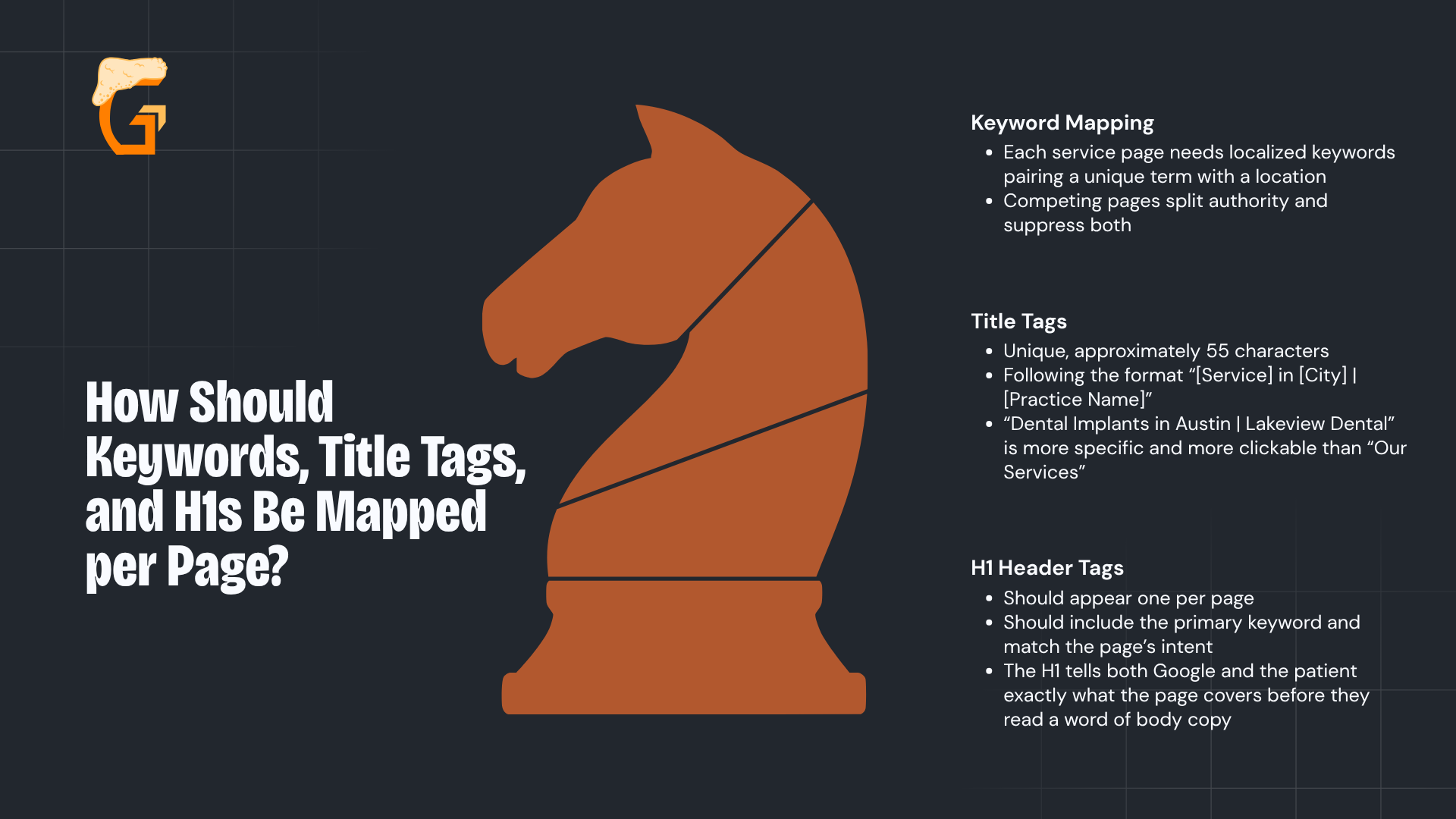
- On-page: title tags, H1s, content depth, and keyword-to-page mapping (how well each page is structured around a specific search intent)
- Local: Google Business Profile completeness, NAP (name/address/phone) consistency across directories, and review volume (the signals that determine map pack visibility)
- Content: gaps in service coverage, thin pages, vendor-supplied duplicate copy, and internal linking (the substance patients actually read and Google evaluates for quality)
- Backlinks and analytics: Decisions in Dentistry confirms that turning findings into a prioritized action plan is what separates a dental audit from a one-time checklist (and the analytics layer is where that plan is measured)
Most audits can start with free tools.
Google Search Console and PageSpeed Insights surface the majority of high-impact technical and performance issues without a paid subscription.
Why Is a Dental SEO Audit Different from a Generic One?
A dental audit weights two things more heavily than a generic site audit – local signals and content quality.
Here is why each one matters for a dental practice:
- Local signals:
- Patients search with geographic intent (“dentist near me,” “dentist in [city]”) and a large share of clicks go to the map pack at the top of local search results, not organic listings
- Local factors like GBP completeness, NAP consistency, and reviews carry outsized weight for a practice
- YMYL content quality:
- Dental pages fall under Google’s Your Money or Your Life classification
- This means health-related content must be accurate, trustworthy, and authored by qualified clinicians (not generic filler text)
A generic audit misses both of these.
You cannot fix what you have not measured – and a dental-specific baseline shows exactly which of the five areas is holding the practice back.