


Pediatric dentist SEO targets parents, not patients.
Every search (“kids dentist near me,” “first dental visit for toddler,” “gentle pediatric dentist”) is made by an adult evaluating safety, comfort, and trust on behalf of a child.
This parent-as-searcher dynamic means content about children’s oral health must address anxiety, reassurance, and credentials differently from general dental practices, which serve adult patients making decisions for themselves.
Understanding the searcher difference is step one.
The second part is knowing that children’s health content faces Google’s highest quality evaluation standards – which means the content and credential requirements are stricter than they are for nearly any other local business.
How Does the Parent-As-Searcher Dynamic Change a Pediatric Dental SEO Strategy?
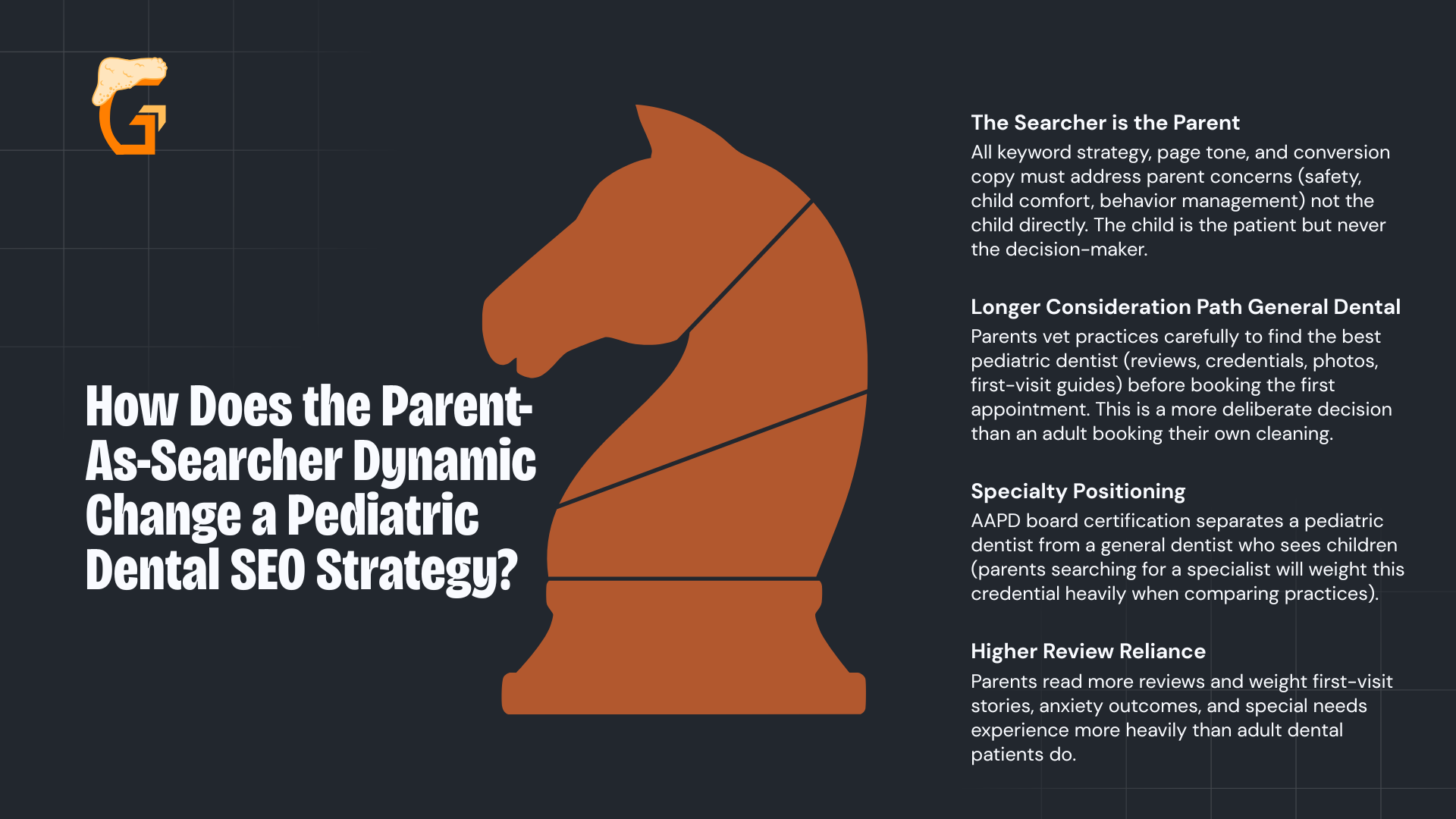
In general dental SEO the searcher is the patient, but pediatric dental patients are children whose parents do the searching.
In pediatric dental SEO the searcher is always the parent – every keyword, page tone, and conversion element must address the parent’s concerns, not the child’s.
Several dynamics separate pediatric dental SEO from general dental SEO:
- The searcher is the parent: all keyword strategy, page tone, and conversion copy must address parent concerns (safety, child comfort, behavior management) not the child directly – the child is the patient but never the decision-maker
- Longer consideration path than general dental: parents vet practices carefully to find the best pediatric dentist (reviews, credentials, photos, first-visit guides) before booking the first appointment (this is a more deliberate decision than an adult booking their own cleaning)
- Specialty positioning: AAPD board certification separates a pediatric dentist from a general dentist who sees children; parents searching for a specialist will weight this credential heavily when comparing practices
- Higher review reliance: parents read more reviews and weight first-visit stories, anxiety outcomes, and special needs experience more heavily than adult dental patients do
The practical result is that pediatric dental SEO requires different content, different conversion copy, and different trust signals than a general dental site (pages written for adult patients who are making their own decisions will not convert searching parents whose first job is to protect their child).
Why Does Children’s Health Content Face Google’s Highest SEO Quality Standards?
Content about children’s dental care is classified as YMYL healthcare content – Google’s quality rater guidelines apply their highest scrutiny because errors or misinformation can affect a child’s health and safety.
That classification raises the bar in several ways:
- YMYL implications: content about children’s health is evaluated under Google’s highest quality standards (E-E-A-T requirements are stricter than for general adult content). A page that would rank easily for adult dental content may be deprioritized for children’s dental content if it lacks clinical credibility.
- Clinical accuracy is required: pediatric-specific clinical accuracy (age-appropriate treatments, safety protocols, sedation guidance) is an E-E-A-T requirement, not optional. Generic dental copy that isn’t adapted for pediatric contexts fails the expertise signal.
- Author attribution: clinical pages (including those describing a pediatric dental exam) must be attributed to a named, AAPD-credentialed pediatric dentist to pass expertise evaluation.
The practical effect is that generalist SEO providers who don’t build YMYL/E-E-A-T infrastructure into their workflow often produce pediatric dental content that ranks for a few months before a quality update deprioritizes it.
Specialist credential proof and clinical accuracy are the signals that make organic search rankings durable.