

Google ranks dental practices in Maps using relevance (category match), distance (proximity to searcher), and prominence (reviews, citations, behavior) – with proximity dominating near-me queries.
Each factor plays a distinct role, and the Map Pack surfaces where those factors intersect most favorably for your practice.
What are relevance, distance, and prominence?
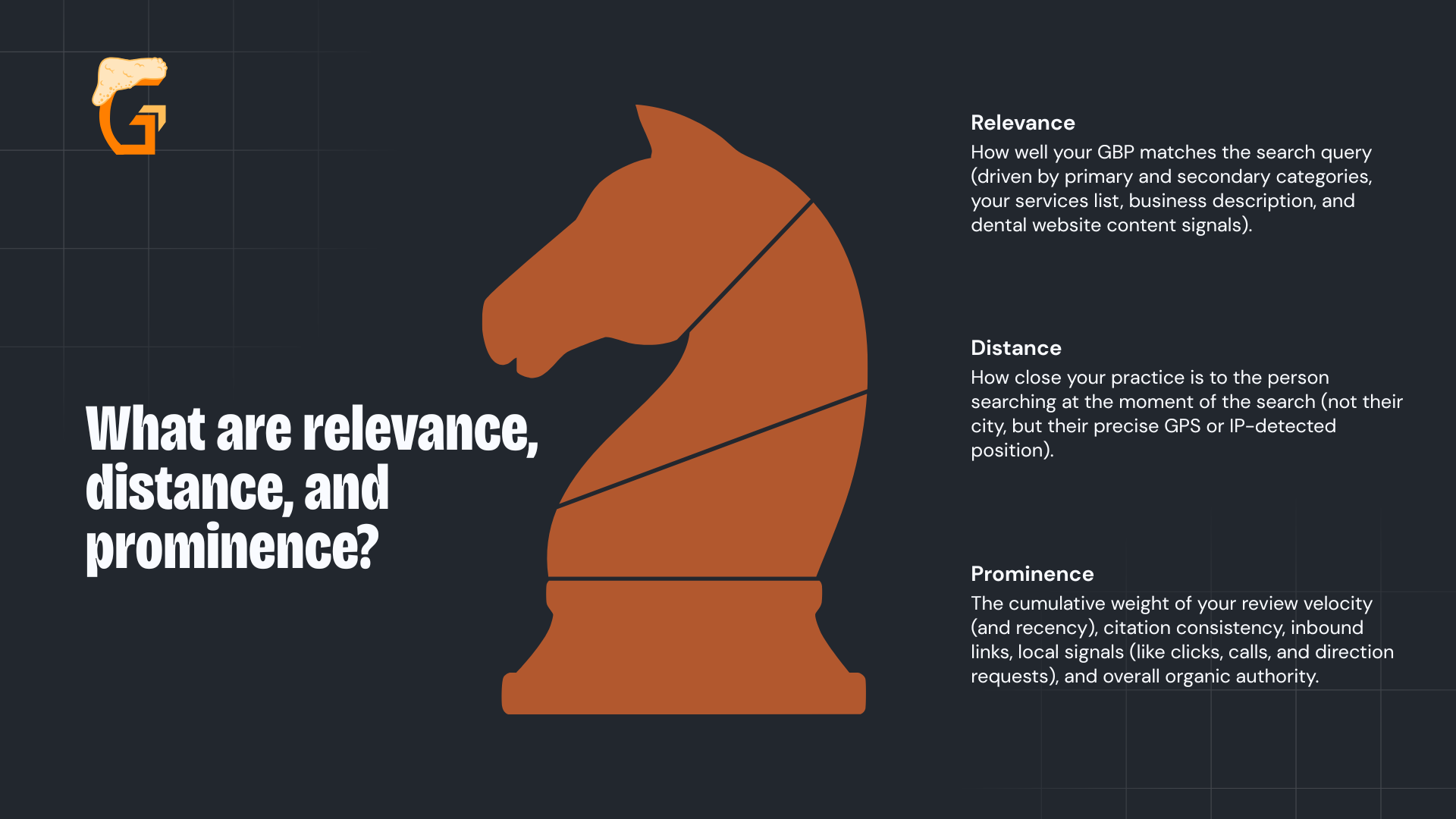
Google’s local ranking algorithm rests on three factors that interact to determine which practices appear in the Map Pack for any given search.
The primary factors Google uses to evaluate these metrics include:
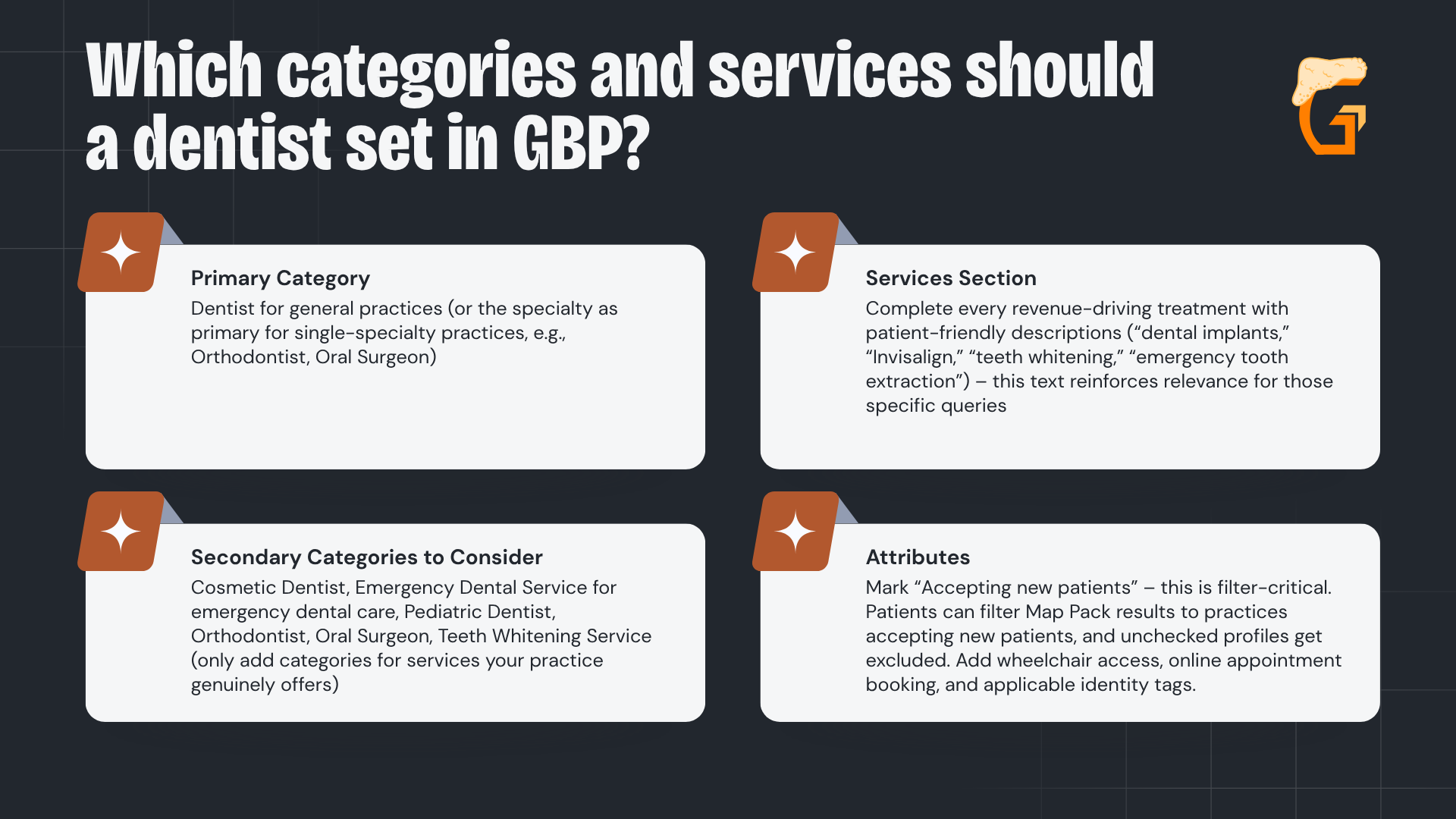
- Relevance: How well your GBP matches the search query (driven by primary and secondary categories, your services list, business description, and dental website content signals).
- Distance: How close your practice is to the person searching at the moment of the search (not their city, but their precise GPS or IP-detected position).
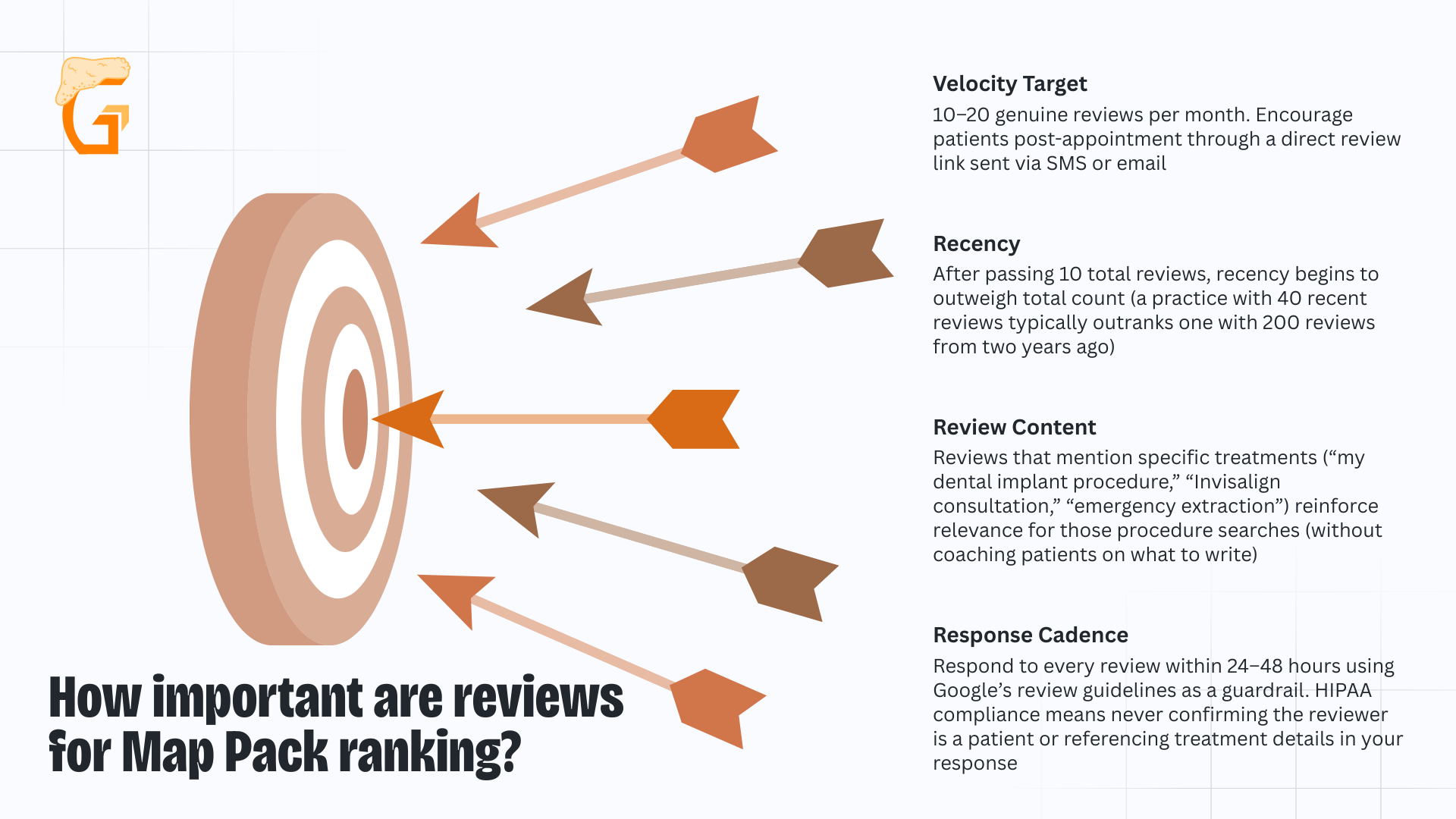
- Prominence: The cumulative weight of your review velocity and recency, citation consistency, inbound links, local signals like clicks, calls, and direction requests, and overall organic authority.
These three factors don’t operate in isolation.
Proximity narrows the candidate pool to practices within a realistic radius of nearby patients. Relevance filters that pool to practices matching the query. Prominence ranks the finalists.
A practice with weaker prominence can still rank locally if proximity and relevance both align.
Why does proximity dominate “dentist near me” searches?
For unmodified queries (“dentist near me,” “dentist open now,” or simply “dentist” typed on mobile), proximity to the searcher has become the dominant ranking factor.
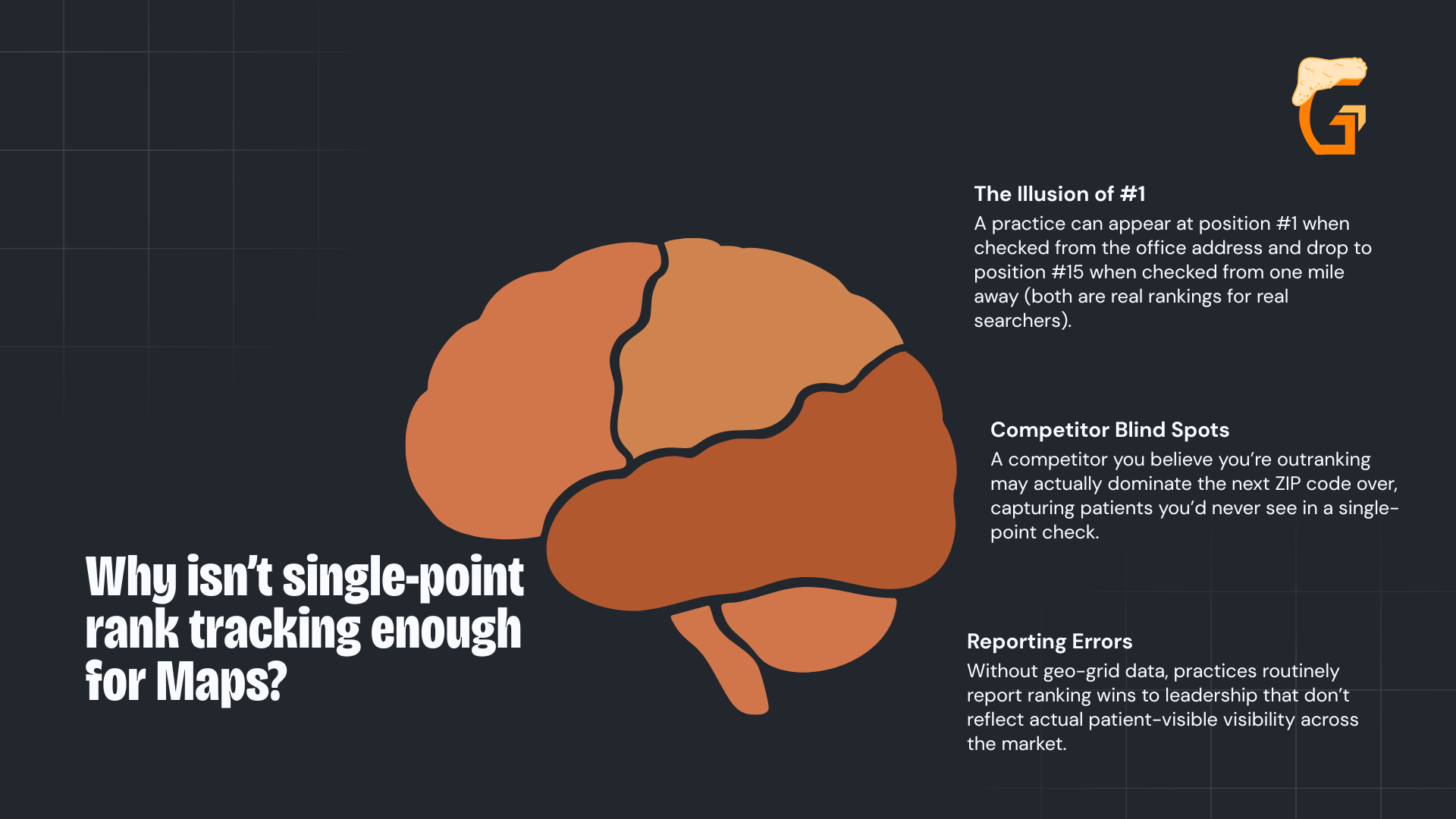
Google detects location via GPS on mobile, IP address on desktop, and WiFi triangulation for tablets – and rank shifts dramatically block by block, often within a half-mile radius in dense markets.
The ways proximity shapes local dental rankings include, but are not limited to:
- How it works: A searcher two blocks from your practice sees a different Map Pack than one six blocks away, so potential patient searches near your competitor may rank them #1 from their street and #6 from yours.
- Service-area settings don’t override proximity: Expanding your GBP service area doesn’t extend your physical proximity advantage – it only affects which searches you’re eligible for, not where you rank within those searches.
- Where prominence regains leverage: For geo-modified queries (“[city] dentist,” “[neighborhood] cosmetic dentistry”), proximity weight shifts toward relevance and prominence inside the named geography, which is where a strong review profile and well-optimized GBP can outrun a closer competitor.
How do Map Pack, Maps interface, and Local Finder differ?
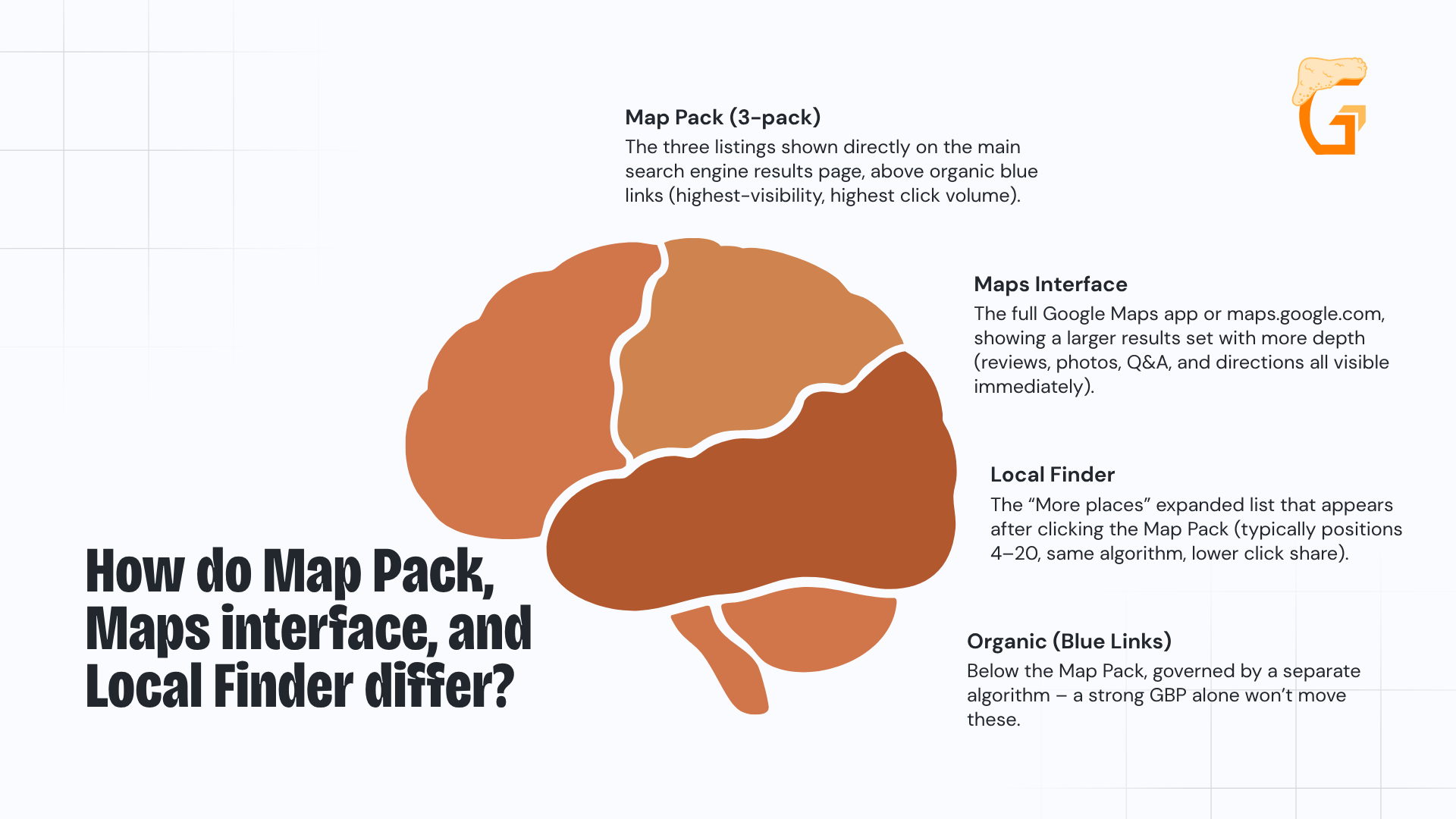
The Map Pack, the full Maps interface, and the Local Finder are three distinct map results surfaces – but they run on the same underlying local algorithm and respond to the same GBP optimization work.
The following surfaces make up the local search landscape:
- Map Pack (3-pack): The three listings shown directly on the main search engine results page, above organic blue links (highest-visibility, highest click volume).
- Maps interface: The full Google Maps app or maps.google.com, showing a larger results set with more depth (reviews, photos, Q&A, and directions all visible immediately).
- Local Finder: The “More places” expanded list that appears after clicking the Map Pack (typically positions 4–20, same algorithm, lower click share).
- Organic (blue links): Below the Map Pack, governed by a separate algorithm – a strong GBP alone won’t move these.
The Map Pack captures roughly 42% of clicks for local queries – making it the highest-leverage SERP surface a dental practice can target.
Optimize the GBP source, and you win local visibility across all three Maps surfaces simultaneously.
Growth Saloon works with dental practices to build and maintain the GBP presence that drives Map Pack rankings (so your team can focus on patient care).
Reach out today to learn how our dental Google Maps SEO strategy can put your practice in front of more local patients.