


Google’s local pack ranks dental practices for potential patients using three signals: relevance to the search, distance from the searcher, and prominence built through reviews, citations, and Google Business Profile completeness.
The triad (Relevance, Distance, Prominence) is published by Google, even though the precise weighting is not.
The local pack is a distinct surface from the blue-link organic results below it, and this cluster goes deeper than the pillar’s introductory framing of these signals.
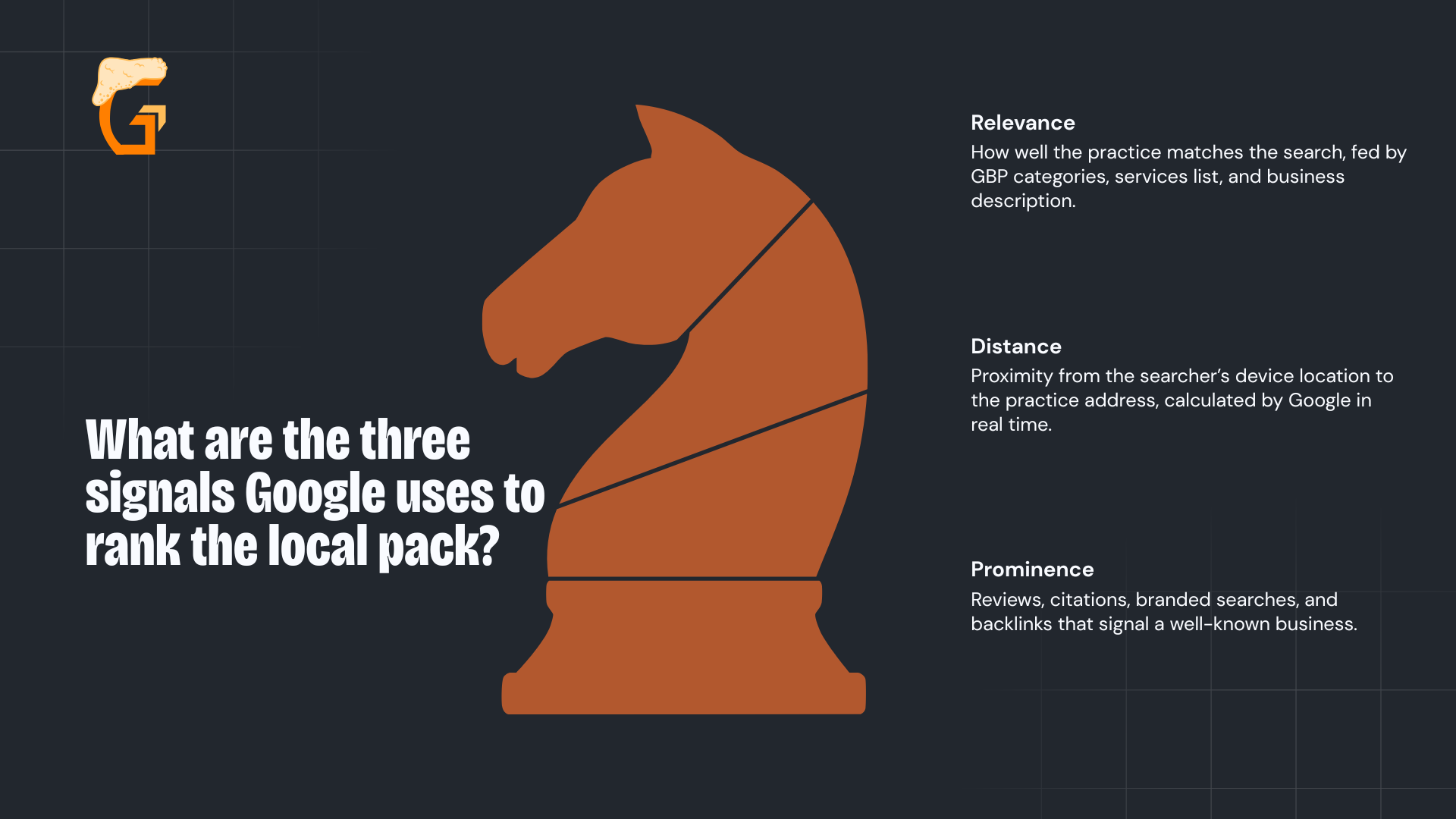
What are the three signals Google uses to rank the local pack?
Google publishes the triad in its own documentation but does not publish individual weights.
The local pack and blue-link organic results are two different surfaces with two different ranking systems on the same SERP.
The three ranking signals Google weighs for every local-pack query are:
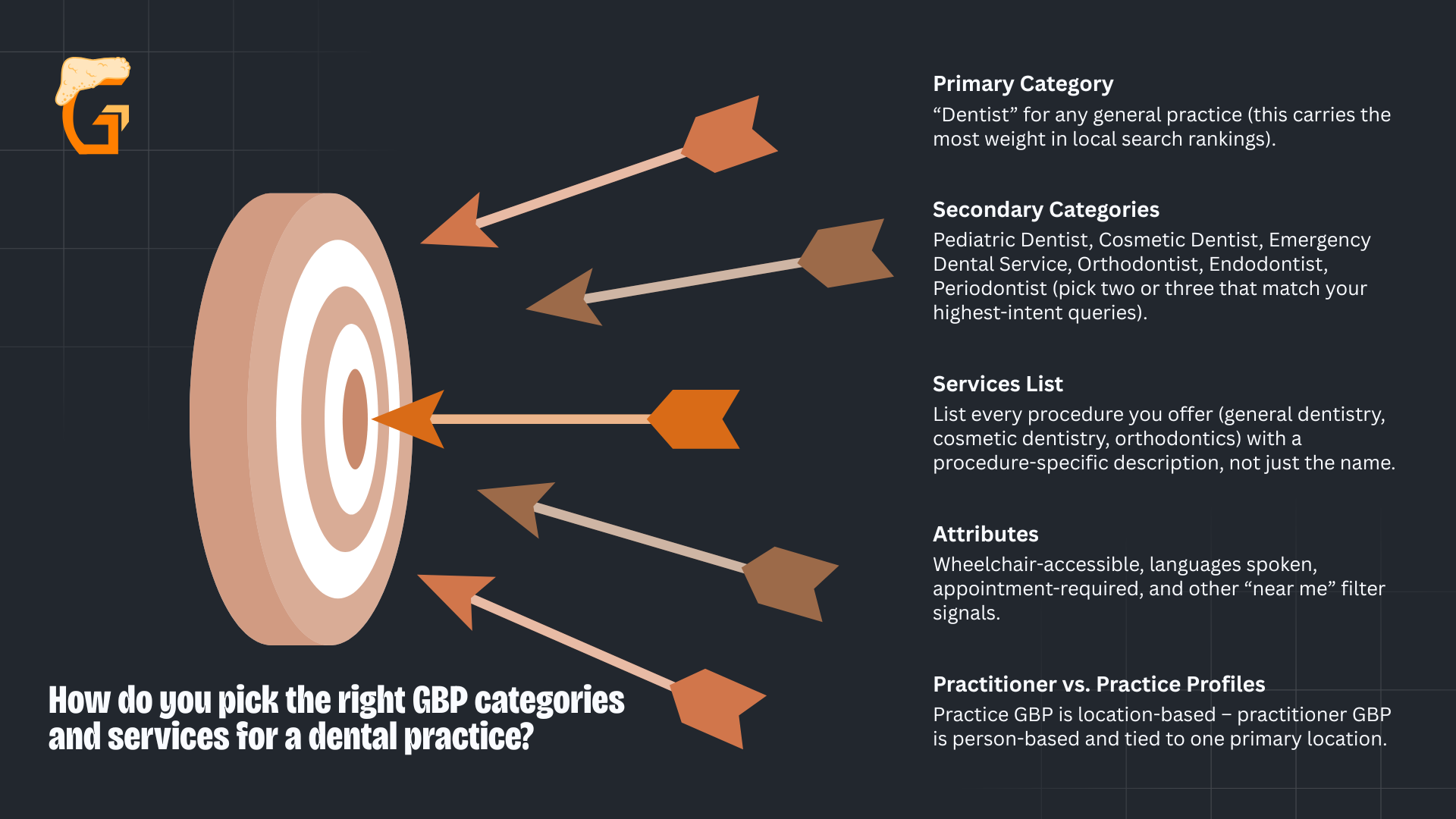
- Relevance: how well the practice matches the search, fed by GBP categories, services list, and business description.
- Distance: proximity from the searcher’s device location to the practice address, calculated by Google in real time.
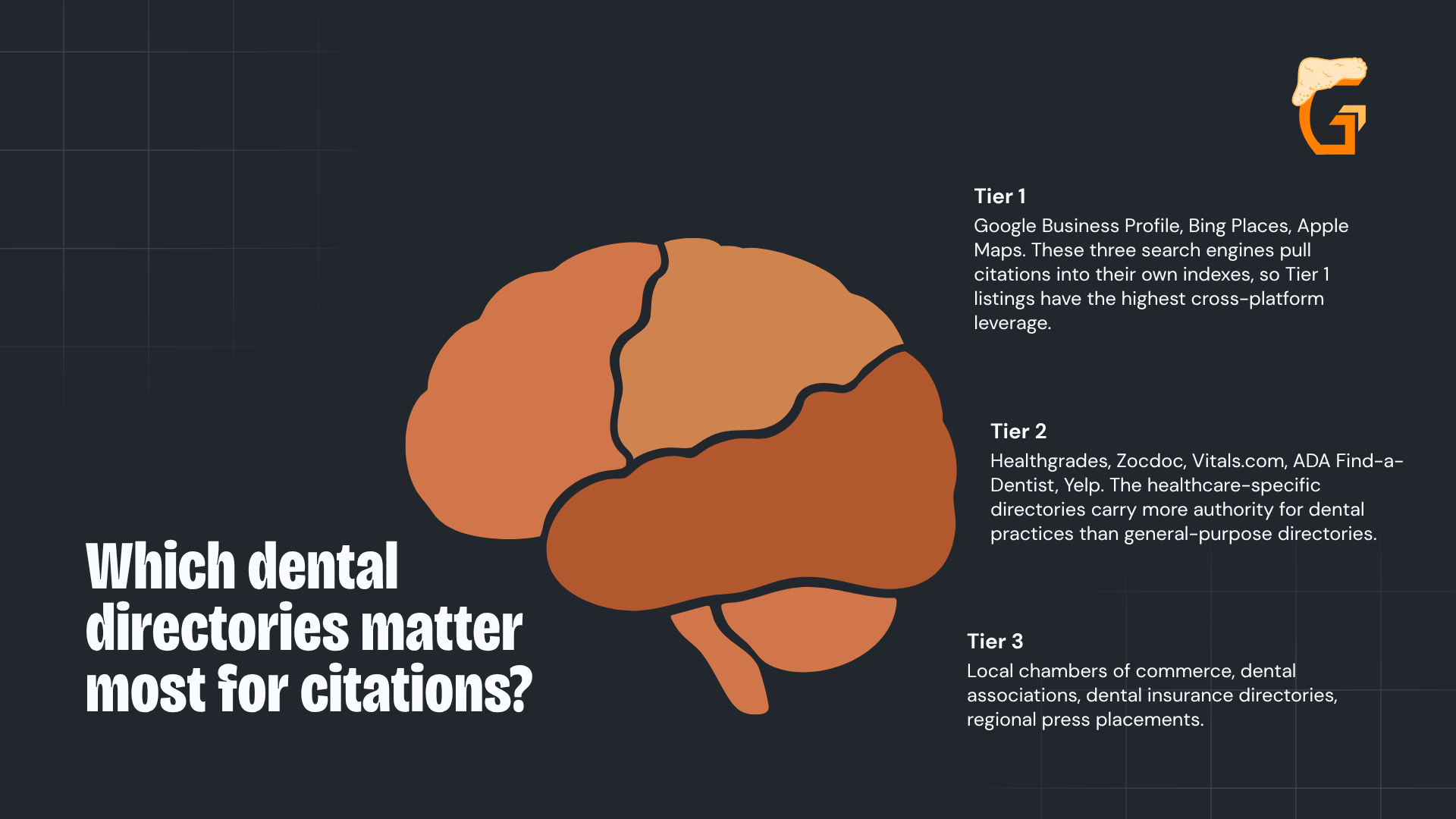
- Prominence: reviews, citations, branded searches, and backlinks that signal a well-known business.
Whitespark’s 2026 Local Search Ranking Factors survey of 47 experts puts measurable weights on the triad for search engine ranking: GBP signals account for roughly 32% of Local Pack ranking influence, review signals 20%, and citation signals 13%.
This is third-party expert consensus, not Google-published, but the relative weighting is consistent across multiple research sources.
BrightLocal’s mobile CTR data for dentist queries shows the top three positions capture roughly 45% of clicks on mobile devices – position 1 at 22.4%, position 2 at 13%, position 3 at 10%.
Broad informational dental queries land in organic results, not the map.
What changed for the local pack in 2026?
AI Overviews now consume local-pack data for dental queries, which changes how prominence signals get surfaced even before a click happens.
As of 2026, three shifts have reshaped how the local pack evaluates dental practices:
- Review velocity weight has risen over raw review count – Whitespark 2026 explicitly elevates recency and cadence over total volume.
- GBP engagement signals (posts, photos, clicks, calls, direction requests) are rising in importance – businesses that “look alive” are rewarded.
- Local-pack-specific signals the pillar does not cover in depth – proximity radius mechanics, Q&A relevance, GBP attribute matching to “near me” filter intent.
Social signals are a new category in Whitespark’s 2026 report at 9% weight for local businesses, reflecting how much patient discovery now starts on platforms outside Google.
The triad translates to a prioritization stack – covered next.