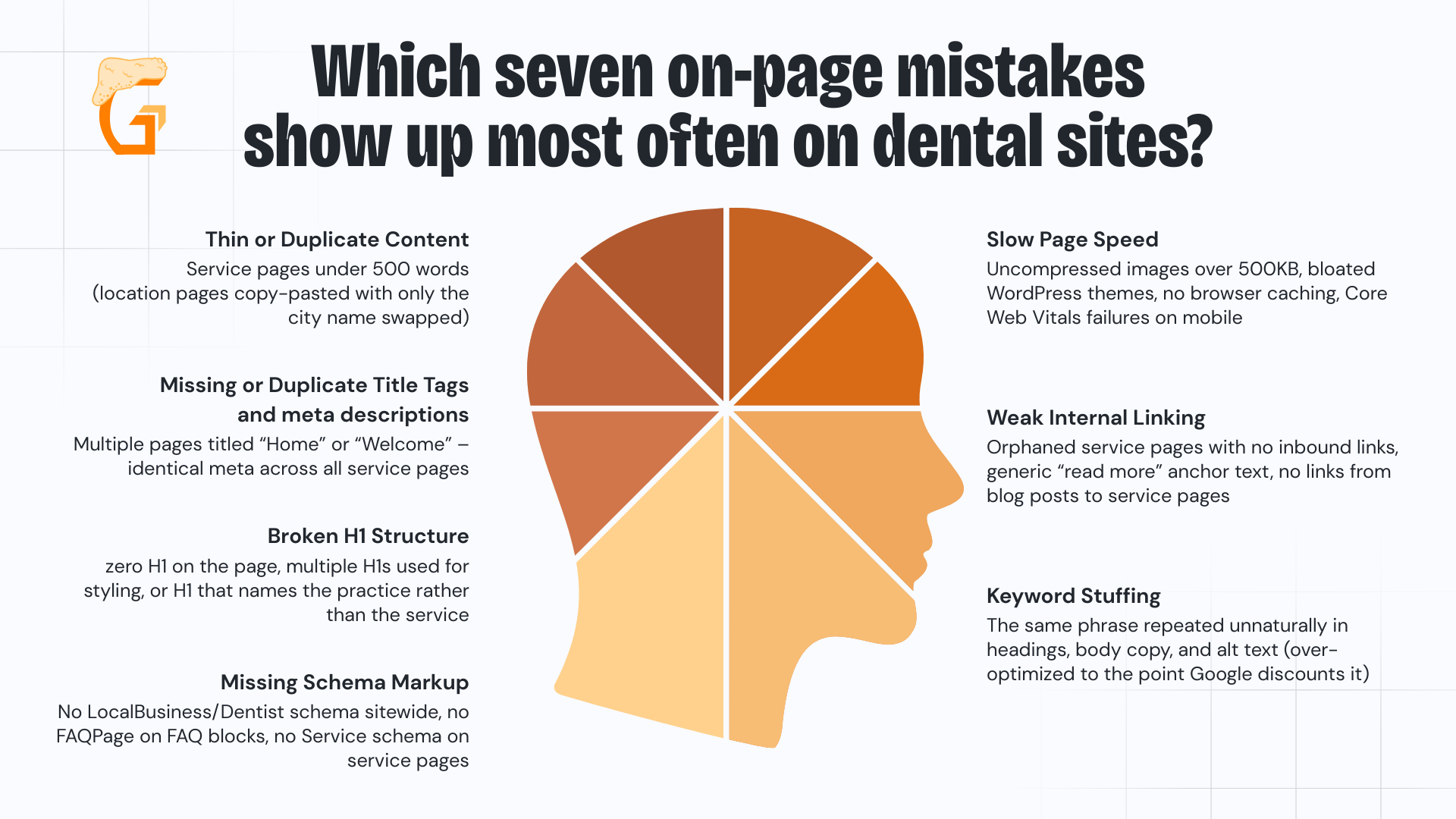
The dental on-page SEO checklist covers unique title tags, meta descriptions, H1 structure, 800+ word service pages, image alt text, internal linking, URL slugs, schema, and local references.
Run it across every core page (services, locations, homepage) and repeat it quarterly.
What HTML basics should every dental page have?
Title tags, meta descriptions, and heading structure are the SERP-facing trio that defines how a page appears to Google and to the patient deciding whether to click.
Google’s title-link documentation specifies the rule – unique, descriptive, accurate – no keyword stuffing, no boilerplate repeated across pages.
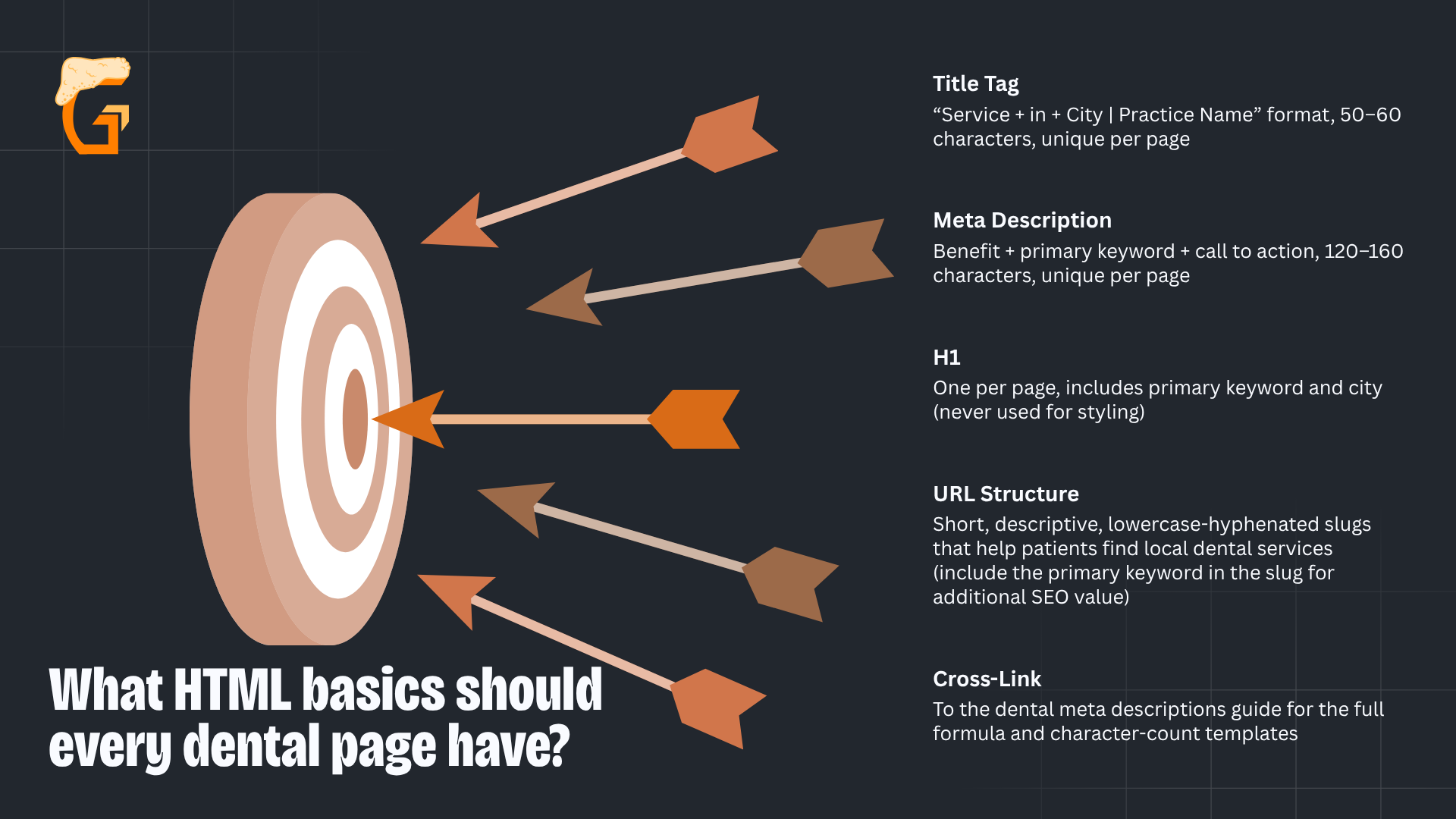
For a dental practice, the HTML basics translate to these page-level requirements:
- Title tag: “Service + in + City | Practice Name” format, 50–60 characters, unique per page
- Meta description: benefit + primary keyword + call to action, 120–160 characters, unique per page
- H1: one per page, includes primary keyword and city – never used for styling
- URL structure: short, descriptive, lowercase-hyphenated slugs that help patients find local dental services (include the primary keyword in the slug for additional SEO value)
- GOOD SLUG: /dental-implants-chicago/
- BAD SLUG: /page?id=47/
- Cross-link to the dental meta descriptions guide for the full formula and character-count templates
The uniqueness rule is non-negotiable.
A dental site with 40 service pages using the same title template (swapping only the name of dental procedures) is leaving online visibility unrealized.
The uniqueness rule pairs with keyword optimization so every page competes for distinct queries and needs HTML that reflects that.
How do you write content and internal links that rank?
Creating high quality content and strong internal linking together determine whether a page ranks and whether it stays ranked once it gets there.
Ahrefs’ internal-links guide documents the canonical pattern – descriptive anchor text, linking from your strongest pages to targets you want to rank, and connecting blog posts back to relevant service pages.
Because dental sites share a predictable architecture, the linking patterns fall into three tiers:
- Homepage: service pages, location pages, blog hub
- Service pages: related services, location pages, relevant blog posts (for example, a cosmetic dentistry page linking to its veneers and whitening guides)
- Blog posts: primary service page (such as a teeth whitening guide) using descriptive anchor text (not “click here”)
On content depth, core service pages (implants, veneers, Invisalign, emergency dentist) should target 800+ words.
Cover candidacy, the process, expected oral health outcomes, costs, and a local FAQ block.
Weave city and neighborhood references that resonate with local patients naturally throughout rather than clustering them at the bottom.
The anti-stuffing rule: use 1 primary keyword plus 2–4 close variations per page.
Natural language (answering the question a patient actually typed) consistently outperforms density targeting.
Growth Saloon pairs content strategy with technical on-page execution to help dental practices rank for the procedures that drive real revenue.
Get in touch today to find out how our SEO content and on-page optimization services can turn your service pages into your top patient acquisition channel.
What technical on-page elements complete the checklist?
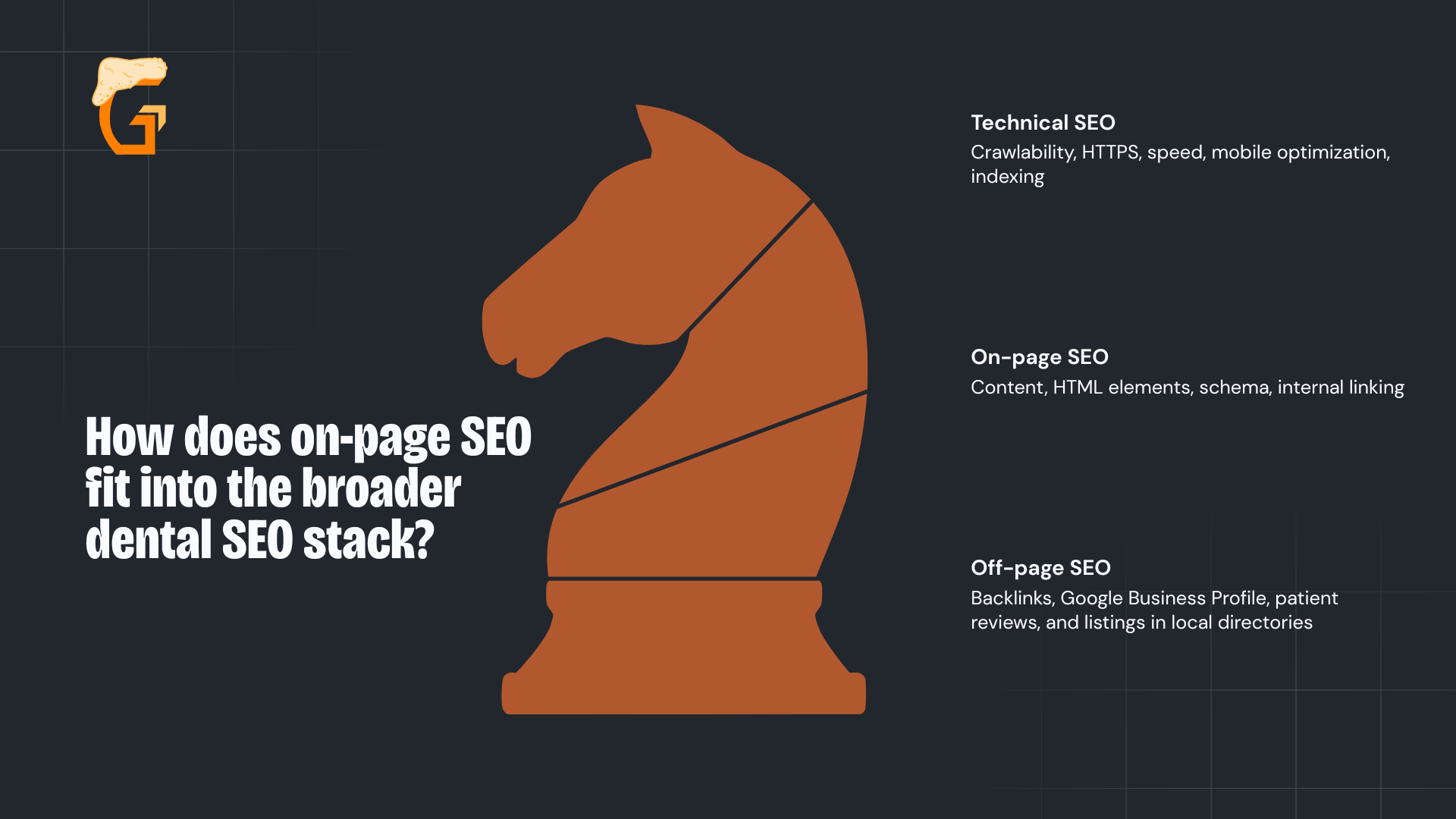
Images, schema, URL structure, and local signals are the fourth pillar of on-page SEO – and the elements most often skipped on dental sites, which makes them high-impact relative to the effort required.
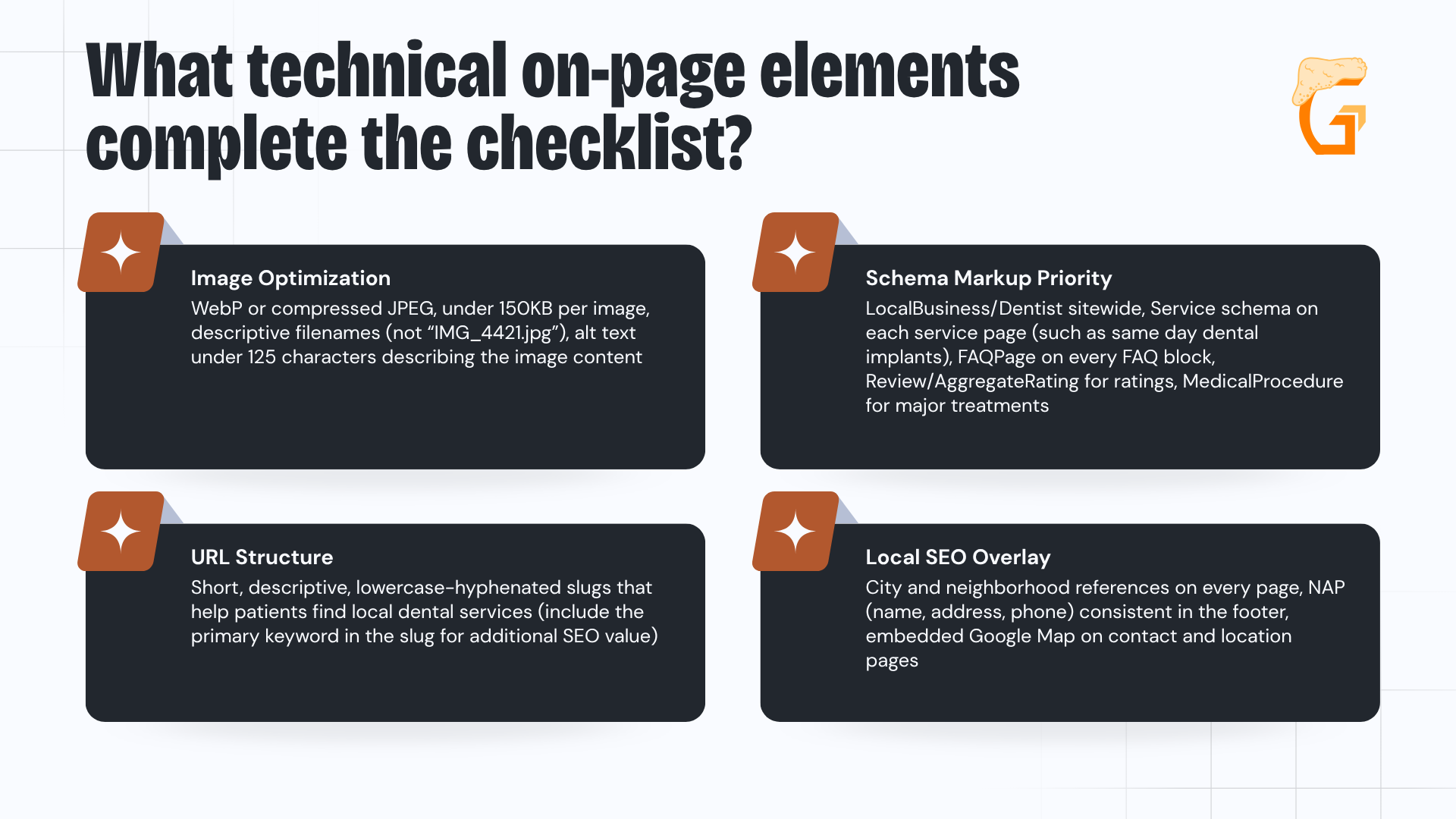
The complete technical on-page checklist includes:
- Image optimization: WebP or compressed JPEG, under 150KB per image, descriptive filenames (not “IMG_4421.jpg”), alt text under 125 characters describing the image content
- URL structure: short, descriptive, lowercase-hyphenated slugs that help patients find local dental services (include the primary keyword in the slug for additional SEO value)
- GOOD SLUG: /dental-implants-chicago/
- BAD SLUG: /page?id=47/
- Schema markup priority: LocalBusiness/Dentist sitewide, Service schema on each service page (such as same day dental implants), FAQPage on every FAQ block, Review/AggregateRating for ratings, MedicalProcedure for major treatments
- Local SEO overlay: city and neighborhood references on every page, NAP (name, address, phone) consistent in the footer, embedded Google Map on contact and location pages
These elements often get skipped because they’re invisible to current and future patients browsing the site.
They’re not invisible to Google.
Schema markup in particular is a compounding signal (once implemented correctly it doesn’t require ongoing maintenance) and it gives Google the structured context to surface your pages in AI Overviews and rich results.
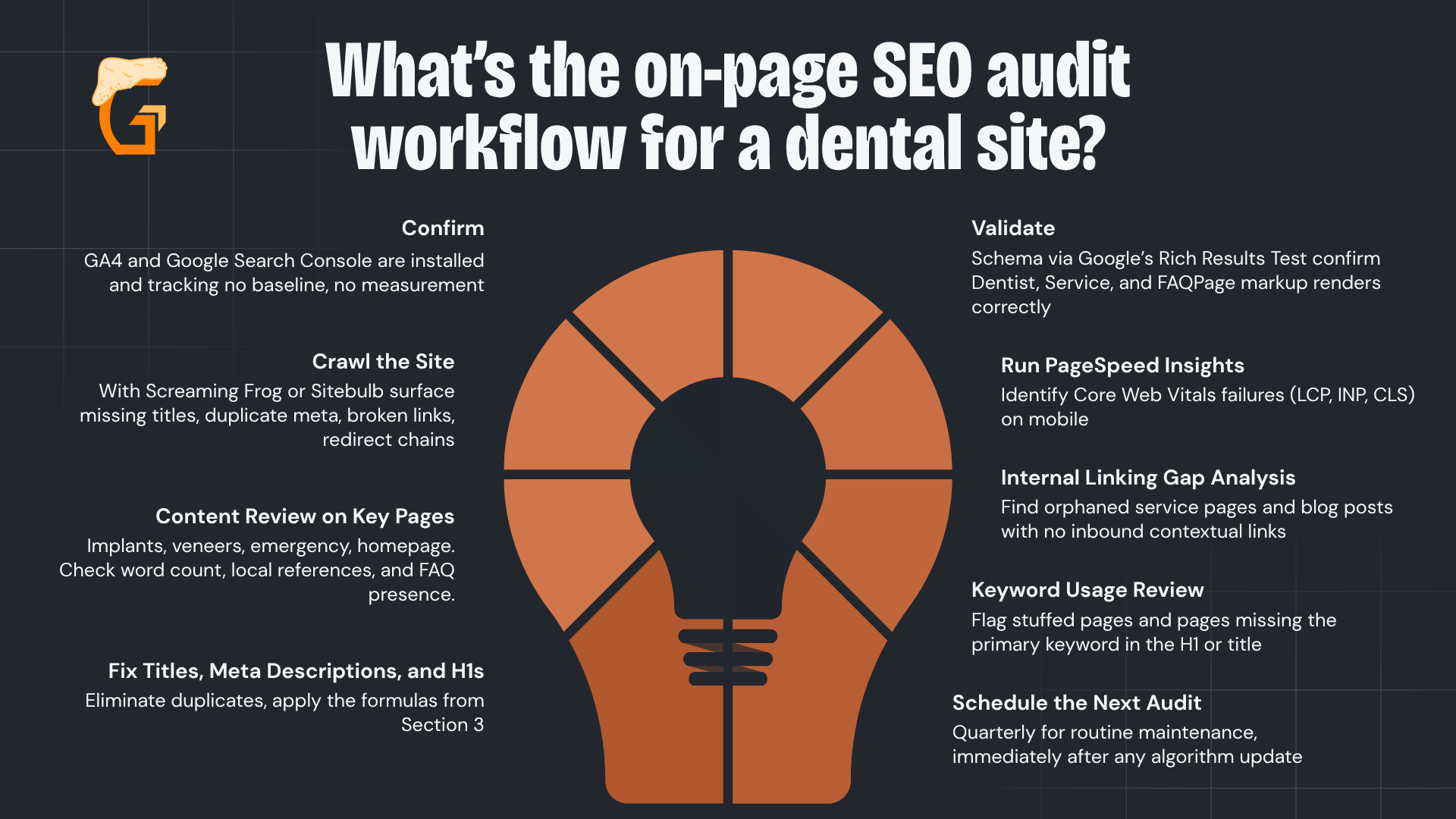
Run the full checklist quarterly across all core pages.